"Kind of Big News": How Sonny Side Earned Best Ever Food Review Show an Emmy Nomination

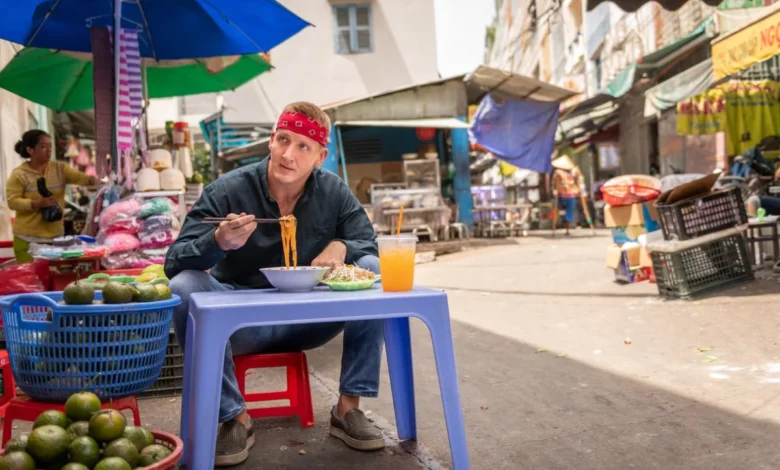
For millions of digital media consumers around the globe, William Sonbuchner—better known to his audience as Sonny Side—has long been a fixture of adventurous international travel and culinary exploration. As the creative force behind the globally renowned YouTube channel Best Ever Food Review Show, Side has spent more than a decade navigating bustling street markets, remote villages, and urban culinary hubs across dozens of countries. However, even for a creator who has amassed tens of millions of loyal subscribers and billions of cumulative views, a recent milestone stands apart from the rest: a prestigious Daytime Emmy Award nomination.
Speaking from his cabin in Minnesota, Side reflected on the magnitude of the achievement with characteristic humility. "I come from a small town in Central Minnesota, and it’s kind of big news to a lot of people," he noted with a smile. While friends and neighbors outside the entertainment industry view the nomination as a historic hometown victory, industry veterans and digital media analysts recognize it as a watershed moment. It signifies the formal bridge between independent digital-first creators and the highest echelons of traditional television and media recognition.
From Small-Town Minnesota to Global Exploration
Sonbuchner’s journey to becoming one of the most recognizable travel and food hosts on the internet was neither direct nor premeditated. Growing up in a small Central Minnesota community, his early career ambitions were modest. He attempted to break into the radio industry, seeking to anchor a prominent market, but faced early setbacks. Recognizing the need for a change of scenery and personal growth before planting permanent career roots, Side made a life-altering decision at the age of 24.
He packed his bags and moved to South Korea, initially intending to spend a year or two teaching English. That temporary excursion turned into an eight-year residency in Seoul. During his time in East Asia, Side developed a deep fascination with video production, self-teaching the nuances of camera operation, lighting, and editing. In 2017, he relocated to Vietnam, a country that would ultimately serve as the operational headquarters for his burgeoning media empire.
What began as a solo venture has since matured into a fully realized, 22-person international production studio based in Vietnam. The team now includes dedicated camera operators, producers, and editors who work in concert to capture the intricate tapestry of global food culture. Reflecting on his evolution, Side credits his time living abroad as essential to shaping his worldview. He observed that transitioning directly from Minnesota to some of the more complex and culturally distinct regions of the world without the intermediate years in Korea and Vietnam might have fostered a more judgmental perspective. Instead, living immersed in foreign cultures imbued him with the tact and sensitivity required to approach sensitive subjects responsibly.
Rejecting Traditional Television Pilots for Creative Freedom
Long before Best Ever Food Review Show became a digital powerhouse, Side faced the classic crossroads confronting many early-stage online creators: choosing between independent digital distribution and traditional studio development. Shortly after launching his channel, Side caught the attention of major television networks, leading to an opportunity to shoot pilots for the Food Network and the Travel Channel.
Looking back, Side considers the failure of those pilots to be one of the luckiest breaks of his professional life. When the networks ultimately passed on the projects and opted not to pick them up, Side was forced to chart his own course. Rather than abandoning his ambitions, he funneled the production lessons, operational discipline, and technical standards learned during the television development process directly back into his independent channel.

This pivot cemented a core philosophy that continues to define his career: absolute creative autonomy. In an industry where network executives frequently dictate editorial direction—vetoing locations deemed too controversial or topics considered too unconventional—Side retains total control over his itinerary.
"As a YouTuber, I love the freedom that I have to go wherever I want," Side explains. "There’s no one looking over me saying, ‘That country is too dangerous or controversial; this topic is too crazy.’ It’s up to me to go wherever I want and tell the stories that I want."
This independence has allowed the production to venture into geopolitical gray zones, economically isolated regions, and culturally misunderstood territories that traditional risk-averse television networks routinely avoid.
Redefining the Food Genre: Culture Through a Culinary Lens
While Best Ever Food Review Show is ostensibly centered on gastronomy, Side has consistently emphasized that the menu is merely a vehicle for a much larger narrative. The show’s overarching ambition is as audacious as it is rare: to document the indigenous foods and culinary traditions of every recognized country on Earth. In a studio-driven industry that historically determines which international cultures are worthy of screen time based on projected demographics or advertiser comfort, Side’s comprehensive approach is groundbreaking.
"The show has never been about only food," Side asserts. "It’s always been about the culture and the people behind the food."
Every plate featured on the program serves as a historical document. A single dish can reveal the geography of a region, the availability of native flora and fauna, the lingering historical footprints of colonization, religious dietary laws, and the resilience or ingenuity of a local population. By examining the logistical journey required to bring a meal from its raw source to a community dining table, the show transforms culinary review into cultural anthropology.
This philosophy highlights a fundamental divergence between independent creators and traditional network hosts. Traditional television often relies on "creativity by consensus"—a structure wherein multiple executive producers, network liaisons, and marketing directors dilute a concept to appeal to the widest possible denominator. In contrast, digital-first creators offer a singular, unvarnished point of view.
"It’s not a load of executive producers telling you how the show should be or feel," Side explains. "You get one person’s or a small team’s point of view on a story or on a topic. That makes for really exciting content that feels like it has a purpose, that’s distinct and different from everything else."

Furthermore, Side challenges the rigid division of labor historically maintained by traditional media companies. In conventional television production, strict boundaries separate on-camera talent from behind-the-scenes directors and producers. Early in his career, when traditional TV production companies attempted to recruit him, negotiations frequently stalled because networks wanted him strictly as talent, refusing to cede directorial control. Side points out that his extensive background as a director—overseeing the framing, pacing, and visual language of hundreds of episodes—uniquely qualifies him to curate his own on-camera reactions and narrative arcs. The blurring of these traditional roles within the modern creator economy, he argues, has been overwhelmingly positive for the media landscape.
The Significance of the Emmy Nomination
The announcement of the Daytime Emmy nomination marks a pivotal milestone not only for Sonny Side and his production crew, but for the broader creator economy. For years, digital creators operated in a parallel universe, measured primarily by metrics such as subscriber counts, view durations, and algorithmic reach. While these digital metrics accurately reflect audience demand, they have historically lacked the traditional institutional validation long coveted by the broader entertainment industry.
When the nomination was first announced, Side was at his cabin in Minnesota, experiencing an initial wave of disbelief. The team had established the Emmy submission as a deliberate goal for the year, testing whether independent digital production could measure up against legacy media competitors under rigorous critical evaluation. As the news settled, the emotional response shifted from shock to profound validation.
"At Best Ever Food Review Show, our goal is to be the best in the world at what we do," Side reflects. "We’re already the most viewed, the most followed travel food show on YouTube. That’s one metric—viewership—but there are others. It could be technical quality, but a lot of it is: what do people think? What is the consensus? How do the people who critique these sorts of things evaluate your work?"
Broader Industry Implications and Future Outlook
The recognition of Best Ever Food Review Show by the National Academy of Television Arts & Sciences underscores a broader structural shift within the entertainment industry. Legacy media institutions are increasingly acknowledging that high-end production value, narrative depth, and rigorous journalistic or anthropological integrity are no longer the exclusive domain of major networks and streaming giants.
Independent creators operating agile, international micro-studios are demonstrating that they can equal—and frequently surpass—the authenticity and reach of traditional studio productions. By maintaining localized teams, such as Side’s 22-person crew in Vietnam, digital-first operations are fostering local talent and technical expertise outside traditional media hubs like Los Angeles, New York, or London.
As the industry looks ahead to the Daytime Emmy Awards, the nomination serves as both a testament to Side’s decade-long dedication and a harbinger of changing times. It signals to aspiring digital creators that uncompromising dedication to craft, storytelling, and audience connection can transcend platform boundaries. For Sonny Side, the nomination is not an endpoint, but a formal acknowledgement that the path less traveled—walking away from network pilots to build an independent studio from the ground up—was the right choice all along.