Navigating the Digital Minefield: Why Corporate Reputation Management is the Ultimate High-Stakes Imperative for Modern Brands

In the hyper-connected digital economy, a brand can spend decades meticulously crafting a sterling reputation, only to watch its hard-earned equity dissolve in a matter of hours due to a single viral post. This volatile reality has become the defining challenge for modern marketing and corporate communications leaders. According to data from the Axios Harris Poll, a staggering 46% of corporate reputations experienced a decline between 2019 and 2025. In an era where public perception can shift on the turn of a hashtag, corporate reputation management has transformed from a secondary public relations task into an existential business necessity.
The landscape of brand perception is inextricably linked to digital discourse. Modern consumers no longer wait for official press releases to learn about corporate developments; instead, they turn immediately to social media and online forums. Data from a Q2 Sprout Social Pulse Survey indicates that social media is overwhelmingly cited by consumers as the primary channel where they first encounter news of a brand crisis. Furthermore, when a crisis does materialize, 64% of consumers demand that brands respond publicly on social platforms rather than relying on traditional, static statements on corporate websites. Consequently, social media managers and digital engagement teams find themselves stationed on the front lines, tasked with the immense responsibility of protecting and nurturing institutional trust.
Anatomy of a Crisis: Lessons from the #ChickenCrisis
To understand the mechanics of effective corporate reputation management, industry analysts frequently point to seminal case studies that demonstrate the power of rapid, authentic engagement. A prime example is the logistical nightmare faced by fast-food giant KFC in 2018, commonly referred to as the #ChickenCrisis. Following a sudden supply chain disruption, the company was forced to temporarily shutter more than 750 of its UK restaurants. Customer frustration peaked rapidly across digital channels as patrons vented their anger online.
Rather than hiding behind formal corporate jargon, KFC leveraged social listening to gauge the escalating backlash and deployed an uncharacteristically candid response. The brand famously rearranged the letters of its iconic acronym on an empty chicken bucket to spell out a crude anagram, effectively communicating a blunt, self-aware admission of failure: “We messed up.”
This bold, light-hearted, and authentic approach immediately defused mounting public tension, short-circuited the trajectory of the negative news cycle, and ultimately sparked viral praise. Nearly a decade later, the campaign remains a textbook illustration of how radical transparency and humor can rescue a brand from the brink of reputational disaster. It underscores a fundamental truth for modern executives: effective reputation management requires active listening, cross-departmental collaboration, and the courage to engage stakeholders on their own terms.
The Tangible Value of Intangible Assets
The stakes surrounding corporate reputation extend far beyond public relations metrics; they directly dictate financial valuation and market capitalization. Seminal research highlighted in the Harvard Business Review study, Reputation and Its Risks, demonstrates that between 70% and 80% of a modern corporation’s market value is derived from hard-to-assess intangible assets, such as brand equity and customer trust. When reputation is compromised, the core valuation of the enterprise is directly threatened.
This vulnerability is reflected in global risk assessments. Findings from Aon’s Global Risk Management Survey consistently rank damage to reputation or brand as a top-tier critical risk facing organizations worldwide. Moreover, research by the Phillips Group indicates that 63% of business-related decisions—ranging from consumer purchases to high-level investor backing—are heavily influenced by institutional trust.
The financial and operational implications of failing to monitor public sentiment can be severe, particularly in heavily regulated sectors. In industries such as financial services, social media acts as an indispensable early warning system. A single misunderstood fee structure, a minor customer service glitch, or a brief technological outage can quickly escalate into a full-scale compliance and public relations crisis if not met with immediate, transparent communication.
Proactive vs. Reactive: Case Studies in Risk Mitigation

While crisis response is critical, the most successful enterprises employ a proactive, always-on approach to sentiment monitoring. By utilizing advanced social listening tools and predictive analytics, brands can identify minor friction points before they metastasize into major corporate crises.
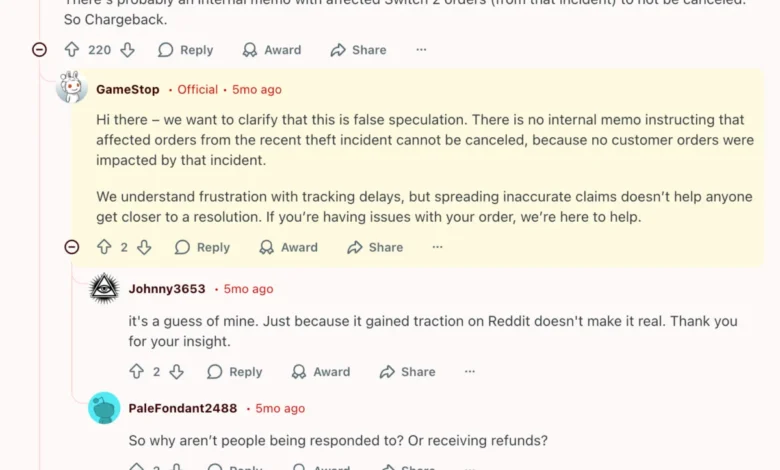
A notable instance of rapid risk containment occurred when a user on Reddit alleged that retail giant GameStop had charged customers for unfulfilled merchandise following a massive $1.4 million warehouse heist involving Nintendo Switch 2 consoles. Rather than allowing the damaging accusation to circulate unchecked across online gaming communities, GameStop’s social media monitoring apparatus flagged the thread immediately. The corporate social team conducted a rapid internal investigation, established the facts, and published a clear, public clarification confirming that no customer pre-orders or financial accounts had been impacted. This swift intervention effectively insulated the brand from unwarranted reputational damage and preserved consumer trust.
Similarly, industrial conglomerates like the Atlas Copco Group utilize sophisticated social listening and intelligence frameworks to track sentiment shifts across global markets. Rather than waiting for large-scale crises to emerge, Atlas Copco’s communications teams monitor recurring, low-level inquiries, localized complaints, and subtle inconsistencies in brand messaging. By aggregating these seemingly minor data points, the organization can implement targeted internal training and governance adjustments, successfully neutralizing potential risks before they impact public perception.
Core Pillars of Modern Reputation Management
For marketing leaders seeking to establish a resilient corporate reputation strategy, industry best practices point toward four foundational pillars:
-
Daily Monitoring and Real-Time Intelligence
Manual monitoring of brand mentions is no longer sufficient in a 24/7 digital economy. Organizations must integrate automated social listening and media monitoring solutions—such as Sprout Social Listening and NewsWhip—to canvas brand sentiment across social channels, news outlets, and forums continuously. Predictive media analytics enable communications teams to discern whether a developing story is primed to dominate the broader news cycle, allowing leadership to execute either an immediate public response or a measured, strategic silence. -
Authentic and Personalized Engagement
When public engagement opportunities arise, brands must abandon rigid, scripted responses in favor of personalized communication. Utilizing unified inbox platforms that centralize incoming customer service inquiries, direct messages, and public mentions ensures that communications teams can respond with empathy, reference specific details from the customer’s query, and resolve issues efficiently. Establishing clear approval workflows and case management protocols further guarantees that no customer inquiry slips through the cracks. -
Rigorous Crisis Preparation
No organization is entirely immune to reputational threats, whether originating internally from employee disputes or externally from supply chain disruptions. Establishing a formal crisis communication plan—supported by a centralized social media newsroom model—ensures that roles, responsibilities, and messaging sign-off procedures are clearly defined before an incident occurs. Setting quantitative benchmarks for conversation volume spikes helps organizations determine precisely when a developing issue warrants active intervention. -
Comprehensive Sentiment and Impact Measurement
To justify marketing investments and demonstrate value to executive stakeholders, brands must systematically track reputation metrics. Key performance indicators should include net sentiment scores, volume of positive versus negative brand mentions, customer response times, and share of voice relative to industry competitors. By correlating these sentiment metrics with broader business outcomes—such as customer lifetime value, lead generation, and revenue growth—marketers can definitively prove the financial ROI of robust corporate reputation management.
The Imperative of Speed and Authenticity
Data underscores the urgency with which brands must operate. According to Sprout Social’s Q3 Pulse Survey, 70% of consumers expect brands to respond to digital outreach within 24 hours. Furthermore, research indicates that 93% of customers believe corporations have a fundamental obligation to actively combat misinformation online. In an environment where authenticity serves as the primary currency of trust, consumers heavily penalize brands that project corporate indifference or fail to engage transparently.
Ultimately, corporate reputation management is no longer an isolated marketing function; it is a critical boardroom priority. As digital conversations accelerate and market volatility increases, organizations that embrace unified listening, rapid engagement, and proactive sentiment management will safeguard their brand equity, secure investor confidence, and achieve sustained, long-term growth.