Native Instruments Announces Super*Saw Synthesizer Developed in Collaboration with PC Music Founder A. G. Cook

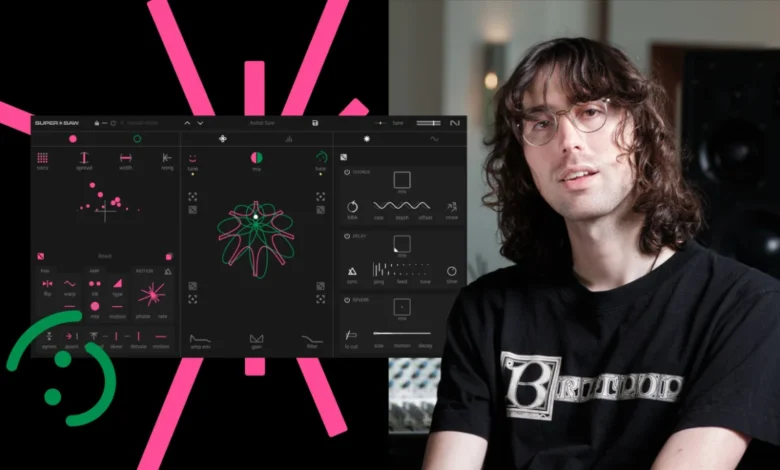
The landscape of electronic music production and sound design has long been defined by a select group of instantly recognizable sonic artifacts, chief among them the stacked sawtooth wave. Emerging from the digital and virtual analog synthesizer revolution of the 1990s, the "supersaw" quickly established itself as the driving force behind Eurodance anthems, euphoric pop hooks, and massive wall-of-sound club tracks. Today, audio technology leader Native Instruments has formally introduced Super*Saw—phonetically styled and pronounced SuperStarSaw—a dedicated software synthesizer co-created alongside visionary artist, producer, and PC Music founder A. G. Cook.
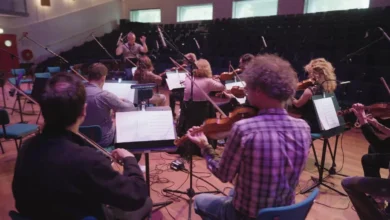
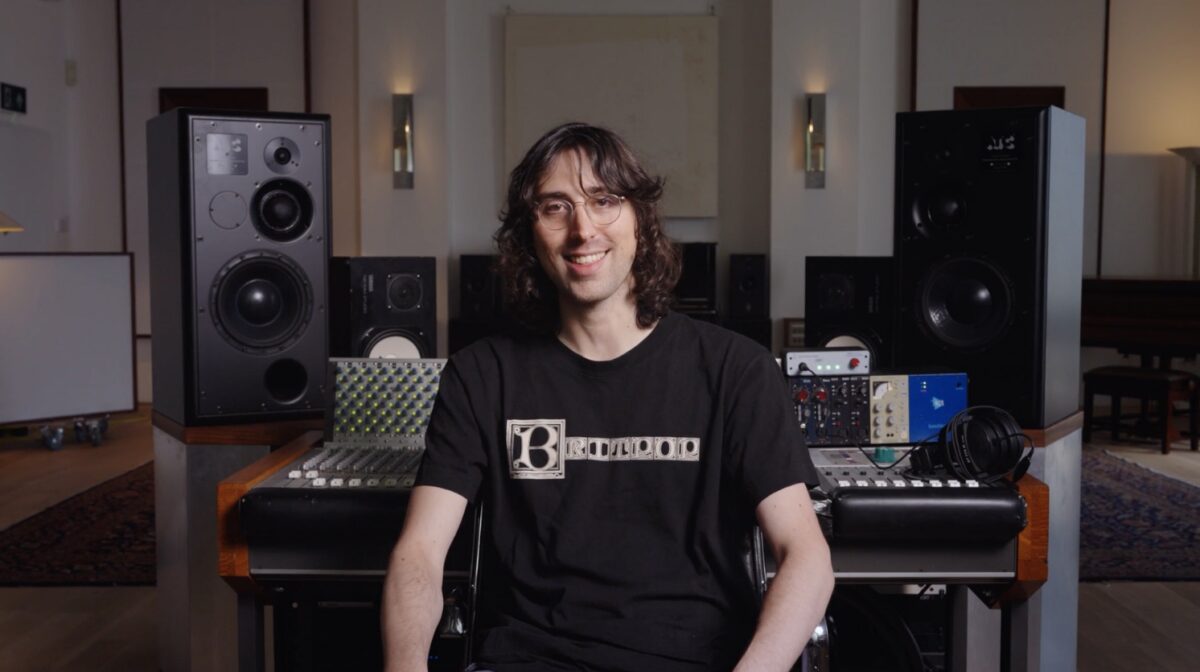
To mark the global launch of the instrument, Native Instruments hosted an exclusive production breakdown and interview session with Cook at the historic Baltic Studios in London. The gathering brought together industry analysts, sound designers, and electronic music journalists to examine Cook’s distinctive production philosophy, his methods for pushing software instruments beyond their conventional limits, and the engineering behind Super*Saw’s ability to condense complex, multi-layered stacking workflows into a single, highly expressive interface.
Main Facts and Technological Architecture
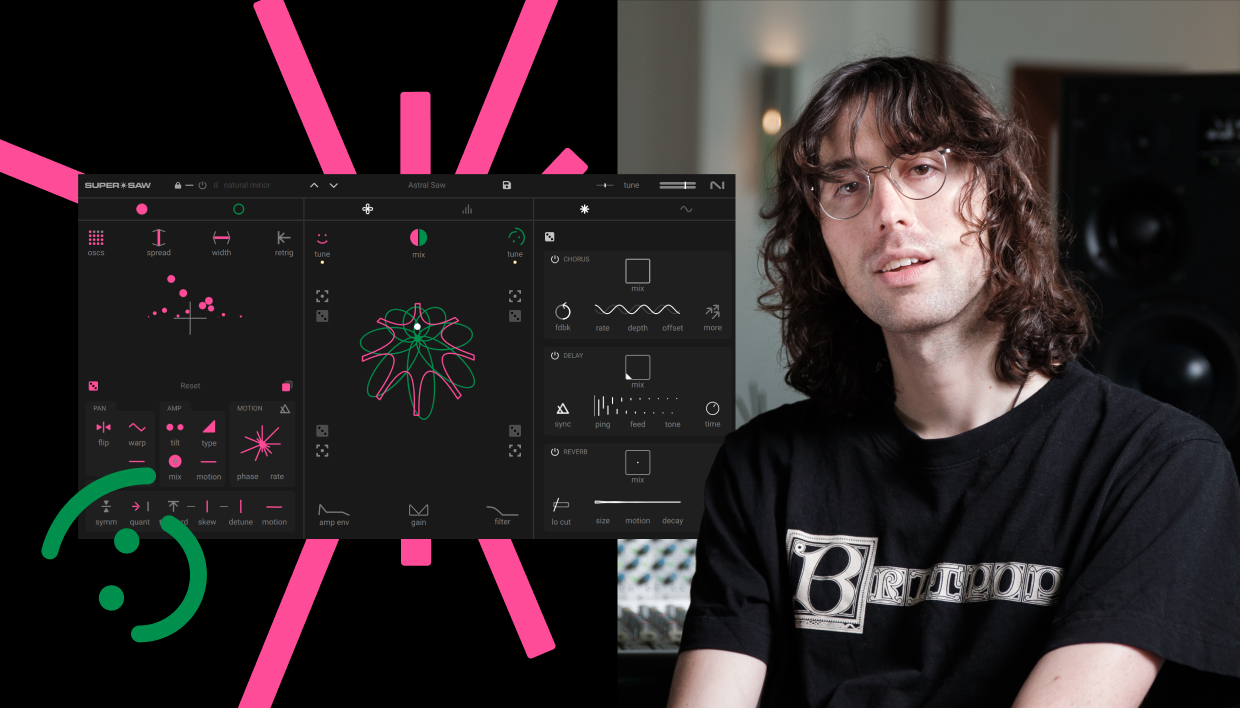
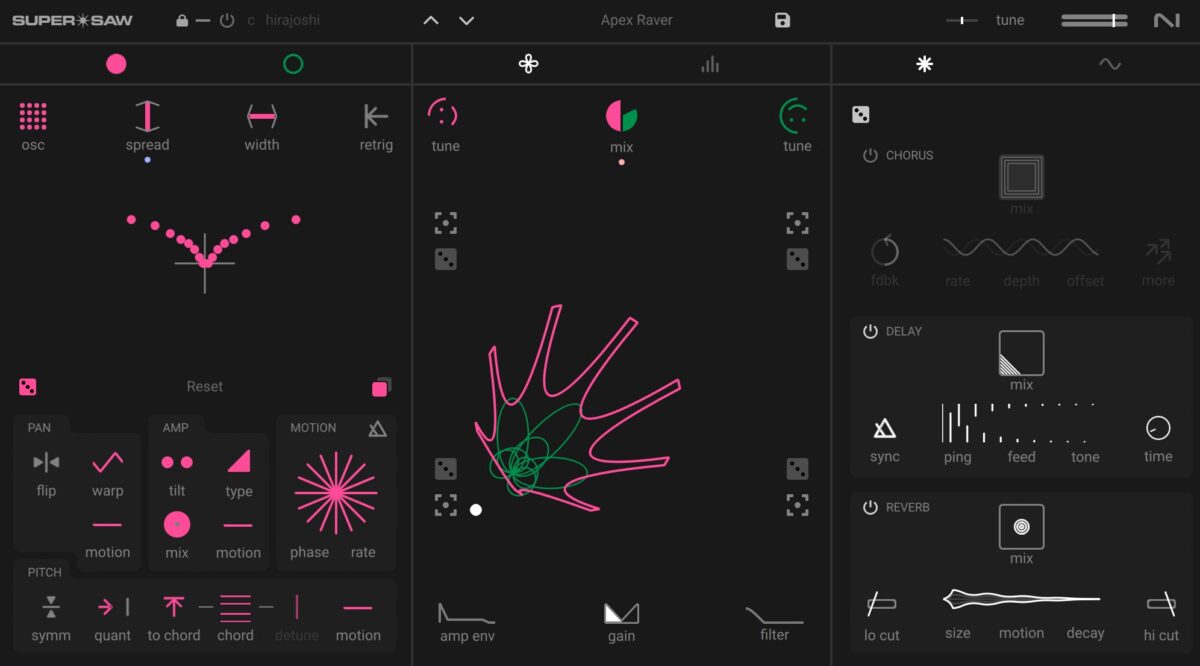
At its core, Super*Saw is engineered to isolate and maximize the creative potential of the sawtooth wave, stripping away extraneous synthesis architectures to focus entirely on harmonic stacking, detuning, and real-time modulation. The plugin features a sophisticated dual 8-voice sawtooth oscillator system, partitioned into two distinct, color-coded visual and operational layers: pink and green.
Rather than relying on traditional, static automation lanes within a digital audio workstation (DAW), Super*Saw is built explicitly for dynamic, real-time performance interaction. The architecture incorporates a specialized four-corner Morpher, allowing producers to seamlessly transition between disparate chord shapes, detuning rates, and modulation states on the fly. Furthermore, the instrument utilizes a star-shaped modulation controller that can be mapped fluidly to parameters such as panning, amplitude, and pitch, granting users immediate control over dense sonic textures.
Background Context and the Evolution of the Supersaw
The conceptual origins of the supersaw trace back to the mid-1990s hardware market, most notably popularized by the Roland JP-8000 synthesizer released in 1996. By leveraging the processing power of early digital signal processors, manufacturers were able to simulate multiple analog-style oscillators simultaneously within a single voice, creating a thick, harmonically saturated chorus effect that defined the trance and rave genres of the late 20th century.
Over the subsequent decades, producers continually sought to expand upon this foundational concept by manually replicating and detuning multiple tracks inside their DAWs. Over the past ten years, A. G. Cook has emerged as a central figure in pushing this aesthetic to hyper-maximalist extremes. As the founder of the influential PC Music record label and a primary architectural force behind the hyperpop movement—through extensive collaborations with artists such as Charli XCX, Oklou, and Caroline Polachek, alongside his own solo bodies of work including 7G, Apple, and his latest full-length record Britpop—Cook has routinely utilized stacked sawtooth waves to blur the lines between harmony, melody, and sheer percussion.
Chronology of Development and the Producer’s Workflow
For Cook, the realization of a signature software instrument represents the culmination of a long-held ambition and a logical extension of his decade-long career in boundary-pushing audio engineering. Prior to the development of Super*Saw, achieving Cook’s signature cascading, evolving textures required laborious, multi-layered DAW sessions. Producers were previously forced to duplicate audio and MIDI tracks, manually input fine-tuning automation curves, and synchronize multiple third-party plugins to achieve the desired movement.
Reflecting on the tedious nature of these historical production workarounds during the London press briefing, Cook noted the friction involved in realizing complex arrangements. On tracks like "Stargon" from his earlier discography, achieving a coherent chord progression required routing numerous disparate plugins and manually aligning their respective detune functions—a process that often sidelined spontaneous musical performance in favor of technical troubleshooting.
The collaborative development cycle between Cook and Native Instruments sought to eliminate these administrative bottlenecks. By codifying Cook’s intuitive approach into a unified plugin, the development team created an environment where complex sound design tasks are handled natively within a single graphical user interface.
Statements and Industry Reactions
The partnership bridges the gap between commercial software development and avant-garde music production, a strategy that industry observers note is increasingly vital for software developers seeking authenticity in a crowded virtual instrument market.
"It’s funny having my own synth plugin," Cook remarked during his discussion at Baltic Studios. "It’s something that’s always been a bit of a goal of mine and kind of on the back burner. I’m always excited when I see artists make their own tools around a specific ideology they have."
Elaborating on the conceptual framework of the instrument, Cook emphasized the importance of building upon historical precedents rather than discarding them. "I’ve really enjoyed building on the notion of the supersaw that was established in the 90s. A lot of instrument design is about taking things that exist in the world and changing the corners, the edges, or the limits of it. Thinking about what could be improved, or flipped on its head. You’re extending the family tree of a musical idea that was started a long time ago."
Cook also detailed the rationale behind the interface’s dual-layer color scheme, comparing the interaction between the pink and green oscillators to comedic timing or theatrical interplay. "I had a strong sense that it would be two layers, these two groups, because that’s often how I think about building sounds. It’s almost like having a comedic duo. One half could be going crazy and the other half could be anchoring it with a fundamental note. It then became obvious that pink and green would stack really well while feeling distinct, so you have these two vivid, contrasting colour worlds."
Broader Market Impact and Implications
The release of SuperSaw arrives at a time when producers across both underground electronic genres and mainstream pop production are placing a premium on immediacy and specialized, character-driven software tools. By narrowing its focus exclusively to the sawtooth wave rather than attempting to serve as an all-purpose workstation synthesizer, Native Instruments and Cook have positioned SuperSaw as a definitive creative instrument for modern sound designers.
Furthermore, Cook views the plugin not merely as a commercial product, but as an artistic milestone that bridges his past catalog with his future trajectory. "This plugin is a sort of coda, epilogue, or final chapter to the albums that I’ve already released as A. G. Cook," he concluded. "Not just the Britpop pink-and-green color scheme, but also the echoes of 7G and Apple’s sonic world. It feels more exciting than just making a big sample pack of all those sounds, to think about boiling that stuff down into an instrument that can be used by other people in completely different ways."
Super*Saw is available now through Native Instruments’ digital distribution channels, compatible with major digital audio workstations and integrated into the broader Komplete ecosystem.