Lili Reinhart and Tom Bateman Reunite for Quinn Audio Romance Olympus U

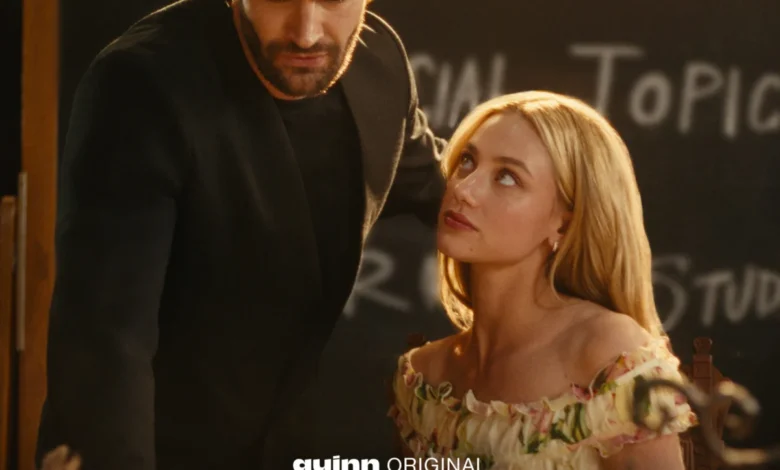
Following the breakout success of their Prime Video romantic feature The Love Hypothesis, actors Lili Reinhart and Tom Bateman are set to collaborate once more, transitioning their palpable on-screen chemistry from visual media to the realm of immersive audio. The duo will lend their voices to Olympus U, a three-episode immersive audio romance slated for release on the audio erotica and romance application Quinn. Written by acclaimed author Kate Goldbeck, the project places a contemporary, collegiate spin on classical mythology, specifically adapting the timeless myth of Hades and Persephone for a modern demographic of romance consumers.
The announcement underscores a broader, rapidly expanding trend within the digital entertainment and publishing landscapes: mainstream film and television talent increasingly turning to high-production-value audio platforms to experiment with intimate, narrative-driven formats. For Quinn, the addition of Reinhart and Bateman marks a significant milestone in its ongoing initiative to secure recognizable Hollywood talent for its curated "Quinn Originals" line, cementing the platform’s status as a formidable player in the modern audio-first entertainment economy.

Narrative Premise and Character Dynamics
At its core, Olympus U reimagines ancient Greek mythology within a contemporary university setting. The narrative centers on Seph, portrayed by Reinhart, who is described as the embodiment of pure sunshine—an ambitious, deeply empathetic people-pleaser. Seeking to expand her academic horizons, Seph enrolls in an undergraduate course titled Underworld Studies, a decision that immediately puts her at odds with the course’s graduate teaching assistant, Hayden.
Hayden, voiced by Bateman, is the brooding son of Hades. While he projects a classic grumpy exterior to the campus at large, the character quickly reveals layers of thoughtfulness and a romantic sensitivity that he works diligently to conceal. The plot thickens when the university’s anonymous gossip column paints Seph as a sheltered "good girl" incapable of navigating the complexities of modern dating. To rewrite the narrative and protect her social standing, Seph convinces Hayden to enter into a fake relationship with her.
True to the popular tropes of contemporary romance, the ruse begins to fracture as the two protagonists grow genuinely closer. The narrative introduces a supernatural twist inherent to its mythological framework: Seph and Hayden discover a mysterious, inexplicable bond that allows them to hear each other’s innermost thoughts. This psychic tether creates immediate narrative tension, making the suppression of their burgeoning romantic feelings nearly impossible.

According to promotional materials released by Quinn, the three-episode arc leans heavily into the enemies-to-lovers and fake-dating trajectories, offering listeners a mythology-steeped dynamic wherein two seemingly opposite deities struggle against their own hearts and the inescapable reality of their minds being open to one another.
Strategic Casting and the Evolution of Quinn Originals
The pairing of Reinhart and Bateman for Olympus U is no accident. Caroline Spiegel, founder and chief executive officer of Quinn, noted that the decision to cast the duo was heavily influenced by the public reception of their work together in The Love Hypothesis. Because that cinematic adaptation traces its creative lineage back to fan fiction traditions—specifically the popular "Reylo" phenomenon from the Star Wars sequel trilogy—Spiegel and her production team recognized an existing foundation of audience enthusiasm regarding the actors’ dynamic.
"Lili and Tom’s chemistry together was undeniable, and we knew our users would be begging for more of them together," Spiegel stated in an official press release. "Love Hypothesis has roots in Reylo fan fiction, so there was already this incredible mythology woven into their dynamic. It felt only right to put them in an actual mythological world, just reimagined for today. They were the perfect pair to bring that same enemies-to-lovers, fake-dating electricity to a spicy Greek mythology-inspired romance."

Olympus U represents the third major duet production under the Quinn Originals banner, a strategic catalog expansion designed to capture listeners seeking multi-actor narrative performances rather than traditional single-narrator audiobooks or erotica. The series follows Ember & Ice, which starred Heated Rivalry actors Hudson Williams and Connor Storrie, and Rent Free, featuring Off Campus stars Mika Abdalla and Stephen Kalyn.
The inclusion of high-profile actors is part of a deliberate scaling strategy by Quinn. Over the past several years, the platform has successfully recruited a roster of prominent film and television actors to voice its audio-drama and erotica catalog. The service’s growing talent directory includes Chris Briney (The Summer I Turned Pretty), Andrew Scott, Manny Jacinto, Tom Blyth, Jamie Campbell Bower, Victoria Pedretti, Jesse Williams, Lucien Laviscount, Thomas Doherty, Katherine Moennig, Costa D’Angelo, Tyriq Withers, Shawn Hatosy, Sam Heughan, and Matt Smith. This aggressive talent acquisition strategy has helped legitimize and mainstream audio erotica, transforming it from a niche digital product into a polished, culturally relevant medium supported by union and mainstream talent.
Chronology of Production and Release Details
The development of Olympus U began shortly after the principal photography and subsequent post-production milestones for The Love Hypothesis. Recognizing the scheduling windows of both Reinhart and Bateman, Quinn’s production team coordinated studio recording sessions, capturing the vocal performances in controlled audio environments optimized for the platform’s signature binaural sound design, which aims to create an intimate, "in-your-ear" listening experience typical of immersive audio erotica.

Episodes one and two of the three-part Olympus U series are scheduled to premiere simultaneously on the Quinn application on Wednesday at 6 p.m. PT / 9 p.m. ET. The third and final installment will conclude the narrative arc, resolving the mythological and romantic tensions established in the opening chapters.
In conjunction with the premiere, The Hollywood Reporter has been granted exclusive behind-the-scenes photography from the recording sessions, offering audiences a rare glimpse into the voice-acting process of Reinhart and Bateman as they brought the academic halls of Underworld Studies to life behind the microphone.
Market Implications and the Rise of Immersive Audio Romance
The continued investment in high-end audio productions by platforms like Quinn reflects a broader structural shift in how intellectual property and romance literature are consumed. As romance novels and web-based fiction dominate global bestseller lists, digital platforms are finding innovative ways to monetize fan engagement by offering sensory extensions of beloved stories and actor partnerships.

Audio erotica and romantic audio-dramas have experienced a massive surge in mainstream acceptance, driven largely by destigmatization campaigns on social media platforms like TikTok, as well as the participation of celebrated actors who lend critical credibility to the format. For established performers like Reinhart and Bateman, these projects offer a flexible, low-overhead method to engage directly with fanbases, explore character-driven romance outside of traditional feature-film constraints, and participate in a rapidly growing digital sector.
Furthermore, the adaptation of classical mythology into modern romance formats—colloquially known as "myth-retelling romance"—remains a powerhouse genre within contemporary publishing. By grafting the Hades and Persephone dynamic onto a university setting complete with academic rivalries and modern gossip columns, Olympus U taps into a pre-existing literary appetite while utilizing the distinct advantages of spatial audio to heighten emotional and sensory intimacy.
As the audio streaming market continues to diversify beyond traditional podcasts and unabridged audiobooks, productions like Olympus U signal a maturing industry where short-form, star-studded audio originals are poised to capture significant market share among digitally native consumers. The performance of Reinhart and Bateman’s latest collaboration will likely serve as a benchmark for future Quinn Originals, testing whether cross-media star power can successfully drive subscriber conversion and listener retention in the competitive landscape of narrative audio entertainment.