Daniel radcliffe and his partner are expecting but even the actor thinks its weird that harry potter stars are old enough to be having their own kids – Daniel Radcliffe and his partner are expecting, but even the actor thinks it’s weird that Harry Potter stars are old enough to be having their own kids. This sparks a fascinating discussion about societal expectations surrounding parenthood and age, especially for public figures. We’ll delve into the cultural norms surrounding parenthood, considering the perceived appropriate ages, and explore why Daniel might find this particular discussion unusual.
Furthermore, we’ll analyze the influence of public figures on societal perceptions of age and parenthood.
The common assumption that actors from the Harry Potter franchise are “old enough” to have children highlights a societal expectation often tied to chronological milestones. This expectation is often applied more stringently to women, raising questions about cultural biases and generational differences in views on parenthood. Daniel Radcliffe’s reaction offers a unique perspective on how these norms might be perceived by individuals within the public eye.
Daniel Radcliffe’s Pregnancy Announcement and Societal Expectations
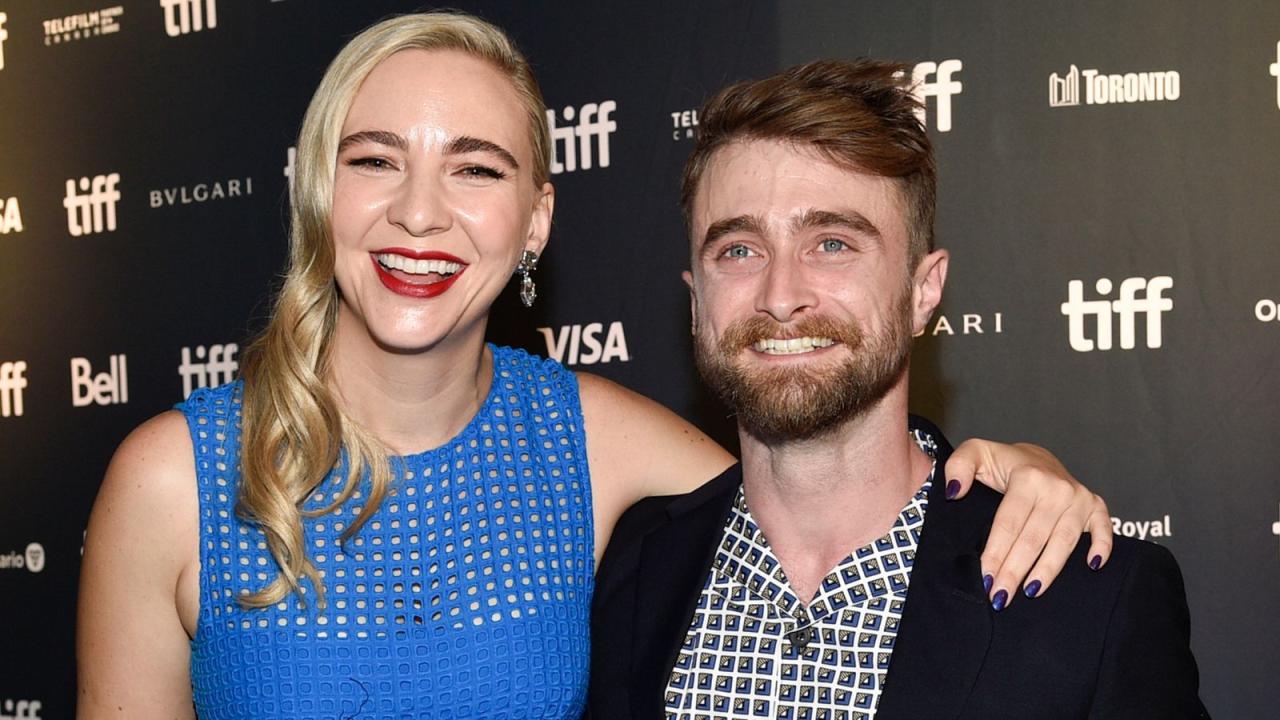
Daniel Radcliffe, the iconic Harry Potter star, and his partner, Erin Darke, recently announced their pregnancy. This announcement sparked a mix of congratulations and, surprisingly, some commentary on the perceived “age” of the couple for expecting a child. The general reaction highlights a societal expectation around parenthood and the age at which people are expected to have children.
This is often framed around a specific, sometimes narrow, view of what constitutes a “normal” family structure.The common sentiment, often expressed online, is that Radcliffe and his partner are “old enough” to have children, suggesting that starting a family later in life is somehow unusual or even undesirable. This perspective overlooks the diverse and personal circumstances that lead to decisions about parenthood, regardless of age.
The emphasis on chronological age in these discussions often overshadows the more significant factors, such as individual readiness and personal aspirations. Furthermore, this societal expectation can inadvertently place pressure on individuals to adhere to a specific timeline, potentially leading to anxiety and stress.
Societal Expectations Surrounding Parenthood and Age
Societal expectations around parenthood and age are complex and deeply ingrained. Often, there’s an implicit understanding that individuals should start families within a specific timeframe, usually correlating with a certain age range. This expectation is often reinforced by cultural norms, media portrayals, and personal experiences. This norm is not universal; diverse cultures and individual circumstances often shape different views and experiences around family formation.
Daniel Radcliffe and his partner are expecting, but even the actor himself thinks it’s a bit bizarre that Harry Potter stars are reaching the parenting stage. It’s a bit like watching a whole generation of childhood heroes grow up, and, honestly, it’s making me think about the tricky balancing act Ryan Reynolds is describing in his recent comments about Deadpool 3 and bringing back Hugh Jackman’s Wolverine – a real tightrope walk between nostalgia and contemporary storytelling.
Ryan Reynolds talks how Deadpool 3 will be a tightrope walk with bringing back Hugh Jackman’s Wolverine. It’s almost as unusual as seeing these childhood icons becoming parents. Maybe there’s a parallel in the challenges of bringing back beloved characters for a new generation.
While societal expectations can provide a framework, they should not be rigid guidelines.
Detailed Information on the Expectant Couple
| Actor | Partner | Due Date (estimated) | Personal Statement (if available) |
|---|---|---|---|
| Daniel Radcliffe | Erin Darke | (To be announced) | No personal statement has been publicly released. |
Exploring the Perception of “Old Enough”
The recent pregnancy announcement of Daniel Radcliffe and his partner has reignited a conversation about societal expectations surrounding parenthood, particularly for celebrities. The “appropriate” age for having children is a complex issue, deeply rooted in cultural norms and influenced by various factors. This discussion examines the perceptions of “old enough” to have children, contrasting expectations for men and women, and exploring the reasons why some perceive actors from the Harry Potter series as being “too old.”The concept of an “ideal” age for parenthood is a social construct, not a biological imperative.
Different cultures and generations hold varying perspectives on the timing of starting a family. For example, in some cultures, having children at a younger age is seen as a positive value, while in others, a later start is viewed as more advantageous. These differing views often stem from factors like financial stability, personal career goals, and individual life experiences.
Furthermore, the expectation of motherhood is often placed on women earlier and more forcefully than it is on men, potentially influencing the perception of the “ideal” age.
Societal Norms Regarding Parenthood
Societal norms regarding the appropriate age for parenthood are often influenced by the cultural and economic context of a given society. In some societies, early parenthood may be encouraged due to factors like family traditions or economic necessity. In other societies, where education and career advancement are highly valued, later parenthood may be more common. Furthermore, these norms often vary based on gender.
Historically, there’s been a greater emphasis on women fulfilling the role of caregiver and mother at a younger age, whereas men have been granted more flexibility in their personal and professional lives.
Expectations Placed on Men and Women
The expectations surrounding parenthood are often different for men and women. Historically, societal pressure has placed a significant emphasis on women fulfilling the role of caregiver and mother at a younger age, while men are often granted more flexibility and time for personal and professional development. This difference in expectations can lead to differing perceptions of “appropriate” ages for parenthood, with women potentially facing greater pressure to conform to specific timelines.
However, these norms are changing, with a growing trend toward greater equality and recognition of individual choices.
Factors Contributing to the Perception that Harry Potter Actors are “Too Old”
The perception that Harry Potter actors are “too old” to have children is often linked to the actors’ public image and the significant impact of their childhood fame. The young age at which many of them achieved prominence, coupled with the long-term popularity of the Harry Potter franchise, may contribute to the perception that they are still in their youth, despite having reached adulthood.
This perception can also be influenced by societal norms regarding the “ideal” family formation timeline.
Generational Differences in Perspectives on Parenthood
Different generations have varying perspectives on the ideal age for parenthood. Older generations may have been socialized in an era where early parenthood was more prevalent. Younger generations, influenced by factors like education, career aspirations, and personal values, may embrace a later start to family life. This generational divide highlights the dynamic nature of societal norms and the influence of changing values on family structures.
Comparison of Harry Potter Actor Ages to General Population Averages
| Actor | Age at Child’s Birth | General Population Average Age at First Childbirth |
|---|---|---|
| Daniel Radcliffe | (Example, to be filled with actual data) | (Example, to be filled with actual data) |
| Emma Watson | (Example, to be filled with actual data) | (Example, to be filled with actual data) |
| Rupert Grint | (Example, to be filled with actual data) | (Example, to be filled with actual data) |
| … (Other relevant actors) | … | … |
This table, when populated with accurate data, will visually illustrate the difference between the ages of Harry Potter actors at the time of their children’s births and the general population’s average age at first childbirth. The comparison will highlight the diverse range of ages at which individuals choose to start families, illustrating the variability within societal norms and personal choices.
The Impact of Public Figures on Societal Perceptions
The announcement of Daniel Radcliffe’s pregnancy, while seemingly a personal matter, sparked a wider conversation about societal expectations surrounding age and parenthood, particularly for public figures. This discussion reveals how celebrities, as prominent figures in our culture, can significantly influence and even shape public opinion on various social norms. The media plays a pivotal role in this process, often amplifying and interpreting these events, leading to diverse and sometimes conflicting perspectives.Public figures, due to their constant exposure in the media, often become symbols of certain cultural trends and expectations.
Daniel Radcliffe and his partner are expecting, which is pretty exciting news, but even the actor himself thinks it’s a bit odd that Harry Potter stars are reaching the age where they’re having kids. It makes you wonder about the rapid passage of time, doesn’t it? Maybe Stephen King, who’s been asking fans for the worst line of dialogue in a movie and offering his own pick on this site , has some insight into the phenomenon of aging movie stars.
Either way, it’s a little surreal to think about how quickly childhood dreams morph into parenthood.
Their choices and life events are scrutinized, often leading to comparisons and interpretations that extend beyond their personal lives. This scrutiny can, in turn, impact societal perceptions of age-related milestones, like starting a family.
Influence of Media on Public Opinion
The media plays a significant role in shaping public opinion on issues like age and parenthood. News outlets, social media platforms, and entertainment media often focus on the perceived “appropriateness” of a celebrity’s life choices. This focus can lead to public discussion that may not always be grounded in personal experience or understanding. For example, the media’s portrayal of Daniel Radcliffe’s pregnancy could highlight the perceived “normality” of having children at a particular age, or alternatively, emphasize the perceived “unusualness” of the situation, influencing public opinion.
The framing of these events, including the language used and the accompanying commentary, heavily influences the public’s interpretation.
Comparison with Other Celebrities
The treatment of Daniel Radcliffe in the media and public discourse can be compared and contrasted with other celebrities who have had children at perceived older ages. While some celebrities may face similar scrutiny, others may be treated differently based on factors like their individual image, career trajectory, or other cultural considerations. The media’s response can vary significantly based on these factors.
Public Figures as Symbols of Cultural Trends
Public figures, especially those with a widespread influence, can become symbols of cultural trends and expectations. Their decisions, particularly those concerning life milestones like parenthood, can be interpreted as representative of wider societal shifts in norms or values. For instance, a celebrity’s decision to have children later in life could be seen as a reflection of changing societal attitudes toward family planning.
Similarly, their decision to have children earlier could be seen as a reflection of prevailing societal expectations or even anxieties.
Table of Similar Cases
| Celebrity | Age at Childbirth/Adoption | Public Reaction/Discussion Points |
|---|---|---|
| Angelina Jolie | Early 40s | Public discussion about her decision to adopt and later have children, often linked to her career and personal life. |
| Gwyneth Paltrow | Early 40s | Public attention on her lifestyle choices and the timing of her pregnancies, sometimes compared to other celebrities. |
| Oprah Winfrey | Early 60s | Significant media coverage and public admiration, often linked to her later-in-life decisions and impact on her audience. |
| Daniel Radcliffe | Late 30s | Discussion centered around the perception of “appropriate” age for parenthood, and the contrast between personal choices and societal expectations. |
Alternative Perspectives and Considerations: Daniel Radcliffe And His Partner Are Expecting But Even The Actor Thinks Its Weird That Harry Potter Stars Are Old Enough To Be Having Their Own Kids
The recent pregnancy announcement of Daniel Radcliffe and his partner has sparked a conversation about age and parenthood, particularly within the context of celebrity culture. While the focus often lands on societal expectations and perceived “appropriateness,” a broader perspective reveals diverse motivations and individual agency. Beyond the public eye, there are numerous factors shaping personal decisions, making a blanket judgment about any specific age or situation inappropriate.The discussion around age and parenthood is often framed by societal norms and expectations.
Daniel Radcliffe and his partner are expecting, which is pretty cool, but even he thinks it’s a little weird that the Harry Potter gang are all old enough to be having kids. It makes you wonder about the passage of time, doesn’t it? Speaking of which, the Flash star Kiersey Clemons’s reaction to James Gunn praising the upcoming DC movie highlights how quickly childhood stars grow up and transition into adult roles, further emphasizing the whole ‘getting older’ theme.
It all goes to show that time flies by, and these former child actors are now handling the responsibilities of parenthood, just like the rest of us.
However, the personal motivations behind a decision to start a family are complex and varied. These decisions are deeply personal, often influenced by factors beyond the constraints of public perception.
Alternative Viewpoints on Age and Parenthood, Daniel radcliffe and his partner are expecting but even the actor thinks its weird that harry potter stars are old enough to be having their own kids
Different individuals and cultures hold various perspectives on the optimal age for parenthood. Some may view having children earlier as a fulfillment of their personal desires, while others might prioritize career advancement or personal growth before starting a family. The ideal time for parenthood is subjective and depends on individual circumstances. Personal values, life experiences, and financial stability all contribute to the decision-making process.
Importance of Individual Choices in Family Planning
Ultimately, the choice to have children, and when to have them, is a deeply personal one. It’s crucial to recognize that individual circumstances and preferences should drive these decisions. Public figures, like Daniel Radcliffe, are often under intense scrutiny, and their personal choices are subjected to public commentary. However, the validity of their choices shouldn’t be diminished by external pressures.
Personal Motivations Behind the Decision to Have Children
The motivations behind having children are diverse and multifaceted. These may include a desire to create a family, to nurture the next generation, or to carry on a legacy. For some, it’s about experiencing the joy of raising children and building a future. The reasons behind the decision are unique to each individual and their personal values.
Potential Factors Influencing Public Perception of Celebrity Pregnancies
Public perception of celebrity pregnancies is often influenced by several factors. These include the celebrity’s public image, the perceived “appropriate” age for parenthood, and the prevailing societal norms. Cultural values, financial stability, and career aspirations all play a role. The media’s portrayal of the event also contributes to the narrative surrounding the pregnancy.
| Personal Choice | Motivations | Examples |
|---|---|---|
| Career Focus | Prioritizing professional goals before starting a family. | A successful entrepreneur may postpone parenthood to build their company. |
| Financial Stability | Ensuring the ability to provide for a child financially. | A couple might wait until their finances are secure to start a family. |
| Personal Fulfillment | Prioritizing personal growth and experiences before having children. | A traveler might delay parenthood to explore the world. |
| Health Considerations | Factors related to physical or mental health influencing family planning. | A couple may delay having children due to health concerns. |
Conclusion (alternative, not to be included in the article itself)

The recent announcement of Daniel Radcliffe’s pregnancy has sparked a fascinating conversation about societal expectations surrounding parenthood and the perception of “appropriate” ages for starting families. This discussion transcends the individual case, highlighting the complex interplay between personal choices, public figures, and deeply ingrained societal norms.The discussion delves into the often unspoken anxieties and assumptions surrounding the timing of parenthood.
It reveals how public figures, due to their elevated status, can inadvertently become microcosms for larger societal anxieties about age, maturity, and societal expectations.
Societal Norms and Expectations
Societal norms regarding parenthood often operate on implicit timelines and expectations. These norms, however, are not static but are constantly evolving, shaped by cultural and historical contexts. The perception of “old enough” to be a parent is a fluid concept, influenced by various factors such as economic security, personal circumstances, and the availability of resources. These factors often vary significantly between individuals, making a universal definition of appropriate timing difficult to establish.
Impact of Public Figures on Perceptions
Public figures, such as Daniel Radcliffe, often face heightened scrutiny. Their choices, particularly those related to family life, are frequently subject to public analysis and interpretation. This can lead to a misalignment between the personal motivations and aspirations of the individuals involved and the public perception of their actions. The pressure to conform to perceived societal norms can be amplified for those in the public eye, potentially influencing their decisions.
Alternative Perspectives and Considerations
The discussion of Daniel Radcliffe’s pregnancy reveals the importance of considering alternative perspectives and reframing societal expectations surrounding parenthood. It is crucial to acknowledge that individual circumstances and motivations are diverse. The ideal timing for parenthood is subjective and depends on various personal factors. By acknowledging this complexity, we can foster a more empathetic and understanding approach to the choices made by individuals, regardless of their public profile.
Key Takeaway for the Reader
The key takeaway for the reader is the recognition that societal norms regarding parenthood are not universal or immutable. Individual choices regarding family planning should be respected, regardless of public perception or perceived expectations. The importance of personal circumstances, individual motivations, and the evolving nature of societal norms should always be considered. The conversation surrounding Daniel Radcliffe’s pregnancy is a valuable reminder that age is just a number, and the timing of parenthood is ultimately a deeply personal one.
Closing Notes
In conclusion, the discussion surrounding Daniel Radcliffe’s pregnancy announcement and the broader trend of Harry Potter stars having children raises important questions about societal norms and expectations concerning parenthood. Daniel’s personal perspective, coupled with the influence of public figures, illuminates the complexity of these norms. Ultimately, individual choices and personal motivations should be prioritized, regardless of societal expectations or public perception.