The cinematic landscape of 2026 has been marked by a peculiar trend, a fascination with environments that disorient and psychologically challenge. Within this emerging genre, the Japanese film Exit 8, now available on Shudder, and the independently produced Backrooms have surfaced, each exploring the unsettling nature of infinite, repetitive, or labyrinthine spaces. While both films aim to induce a sense of existential dread and psychological unraveling in their protagonists, Exit 8 distinguishes itself with its direct origins in interactive media and its focused exploration of everyday anxieties manifested in surreal architecture. The film, which premiered at the 2025 Cannes Film Festival, is an adaptation of the popular Japanese video game of the same name, itself described as a "walking simulator" that utilizes puzzle-solving akin to spot-the-difference games. This foundation lends Exit 8 a unique conceptual framework, blending high-concept horror with a deeply personal narrative, leaving audiences both bewildered and appreciative of its ambitious execution.
The Premise of Perpetual Loops
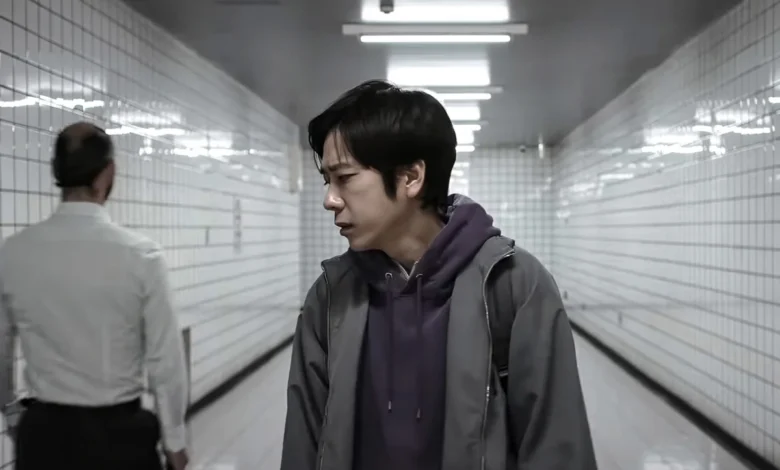
Exit 8 centers on an unnamed protagonist, credited as the Lost Man (portrayed by Kazunari Ninomiya), who finds himself in a disquieting subway car. The scene opens with a stark depiction of modern alienation, with all passengers engrossed in their digital devices, oblivious to their surroundings. The palpable tension escalates with the crying of a baby and the subsequent harsh admonishment from a fellow passenger, highlighting a societal indifference that the Lost Man, despite his initial inaction, will soon find himself profoundly entangled in. A crucial turning point arrives when the Lost Man receives a call from his ex-girlfriend, revealing her hospitalization and pregnancy. This personal crisis, coupled with his own escalating respiratory distress, signaled by his use of an inhaler, occurs just as he seems to enter a "liminal space"—a term that has become increasingly prevalent in discussions of atmospheric horror. This parallel dimension, seemingly designed to amplify distress on life’s most challenging days, serves as the film’s primary setting.
Navigating the Labyrinth: The Mechanics of Survival
The narrative perspective then shifts. Having initially experienced the Lost Man’s ordeal through a first-person point of view, the audience transitions to a third-person perspective as he navigates the seemingly endless corridors of the subway station in search of Exit 8. The unsettling realization dawns: he is trapped in a loop, traversing the same hallways, making the same turns, and encountering the identical elements—doors, posters, vents, lockers, trash cans, and photo booths—repeatedly. The recurring figure of the Walking Man (Yamato Kochi) passing him at precisely the same intervals further solidifies this nightmarish reality.
The film introduces a set of cryptic instructions found on a sign: if an anomaly is detected among the recurring environmental elements, the protagonist must turn back; if no anomaly is present, he should proceed. Successfully identifying anomalies, eight times over, is presented as the path to freedom. Failure to spot an anomaly results in a return to the starting point, or "level zero." This mechanic, directly inspired by the video game’s core gameplay, translates the interactive challenge into a cinematic experience. However, the film also illustrates the futility of certain actions; attempting to document the environment through photography proves useless, as the captured images are distorted and incomprehensible, reinforcing the inescapable nature of his predicament.
Expanding the Narrative Through Shifting Perspectives
To alleviate the potential monotony of a single character’s repetitive journey, Exit 8 strategically introduces other viewpoints. The perspective shifts to the Walking Man, offering a glimpse into his own cyclical existence, and to a largely mute young boy, referred to as the Boy (Naru Asanuma). The Boy’s presence is often interpreted as a symbolic representation of the Lost Man’s internal anxieties. The anomalies themselves range in subtlety, from a misplaced doorknob to more overt references, including visual callbacks to Stanley Kubrick’s The Shining, which, while borrowing heavily, serve to break the pervasive monotony of the endless corridors. The film poses an enduring question: is the Lost Man truly lost only within this constructed space, or does his perpetual search for an exit reflect a deeper, existential malaise that extends beyond the confines of the station? The ambiguity of the ending leaves this interpretation open to the viewer.
Thematic Resonance and Influences
The thematic and structural similarities between Exit 8 and Backrooms are undeniable, both tapping into the disquieting allure of liminal spaces. However, Exit 8‘s unique origin as a video game adaptation provides a distinct conceptual framework. The film draws parallels to other puzzle-box thrillers like Escape Room and the seminal 1990s cult classic Cube, films that similarly trap protagonists in inescapable, logic-defying environments.
While Exit 8‘s high-concept premise limits extensive character-driven performance, Kazunari Ninomiya effectively conveys the mounting dread and frustration of his character. Yamato Kochi also delivers moments of unsettling tension and palpable exasperation, mirroring the audience’s potential reactions. The film contains no explicit sexual content or nudity.
Critical Reception and Broader Implications
From a critical standpoint, Exit 8 has been met with a degree of appreciation, often distinguished from outright enjoyment due to the intentionally maddening repetition and extended sequences of hallway traversal that characterize both this film and Backrooms. The film’s strength lies in its thematic cohesion, skillfully weaving the Lost Man’s personal crisis—his pending fatherhood juxtaposed with the drudgery of his daily life—into the fabric of the surreal environment. This metaphorical liminal space resonates with the universal human experience of fearing change while simultaneously being trapped in stagnant routines.
Despite its relatively brief runtime of 95 minutes, the film’s narrative can feel stretched. Even the shifts in protagonists and viewpoints ultimately underscore the shared predicament of all characters, trapped within the same confines and repeating cycles. Unlike Backrooms, which explores more overtly surreal and psychedelic visual landscapes, Exit 8‘s environments, while unsettling, remain largely consistent. Director Genki Kawamura effectively employs visual metaphors to represent the pressures of modern life and the overwhelming sensation of being submerged by stress. The narrative arc of the Walking Man, for instance, serves as a cautionary tale about the perils of seeking shortcuts when the more arduous path is ultimately the correct one.
The film’s exploration of these compelling themes, coupled with Kawamura’s directorial prowess, renders Exit 8 a worthwhile cinematic endeavor. However, a persistent auditory element—an irritating noise that accompanies characters entering the main corridor, whether a musical flourish or a sound effect resembling a squeaky merry-go-round—has been noted as a significant detractor, capable of inducing considerable frustration. This auditory motif, if encountered in a stress-inducing dreamscape, could potentially trigger significant psychological distress.
Conclusion: A Formidable Experiment
Ultimately, Exit 8 is recognized as a robust experiment in cinematic form that warrants a level of acclaim comparable to that received by Backrooms. The film is recommended for viewing, though a temporary respite from the pervasive exploration of psychological labyrinths might be beneficial for audiences. The film’s success lies in its ability to translate the interactive anxieties of a video game into a compelling, albeit challenging, cinematic narrative that speaks to broader existential concerns.
John Serba, a freelance film critic based in Grand Rapids, Michigan, offers his analysis of the film. His career in film criticism has been noted, and he once had a personal encounter with filmmaker Werner Herzog.