
Chucky Why Now Is The Best Time To Catch Up With The Amazing Horror Series
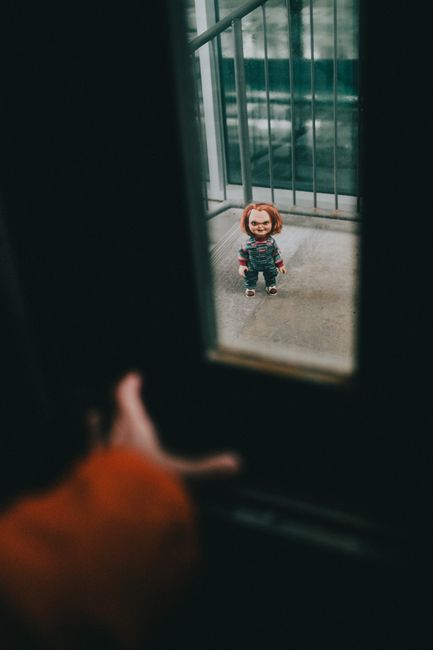
Chucky: Why Now is the Absolute Best Time to Dive into the Killer Doll’s Terrifying Franchise
The enduring legacy of Chucky, the pint-sized terror with a soul of a serial killer, has captivated horror fans for decades. From its explosive debut in 1988’s Child’s Play to its latest incarnation in the critically acclaimed television series Chucky, the franchise consistently reinvents itself while staying true to its gruesome roots. For those who have yet to experience the mayhem or for seasoned fans looking to revisit the madness, now presents the opportune moment to immerse yourself in the wickedly fun and surprisingly profound world of Charles Lee Ray, embodied by the iconic Good Guy doll. The recent resurgence in popularity, fueled by the television series’ critical darling status and the franchise’s continued presence in pop culture, makes it an irresistible invitation to explore or re-explore this unparalleled horror phenomenon.
The original Child’s Play was a masterstroke of supernatural slasher filmmaking. Don Mancini’s brilliant concept, a possessed doll imbued with the spirit of a notoriously brutal killer, tapped into primal fears of innocence corrupted and the uncanny valley. The film’s success wasn’t just about jump scares; it was about psychological terror. Andy Barclay, a young boy gifted a seemingly harmless doll, finds his life systematically dismantled by the malevolent entity within. Chucky’s physicality, a diminutive doll capable of extreme violence, created a unique brand of dread. The contrast between the doll’s innocent facade and its murderous intent was, and remains, deeply unsettling. Brad Dourif’s performance as the voice of Chucky is nothing short of legendary. His gravelly, venomous delivery imbues the doll with a chilling charisma, making Chucky more than just a puppet; he’s a character with personality, a twisted sense of humor, and an insatiable thirst for vengeance. This initial film laid the groundwork for what would become a sprawling mythology, introducing key characters like Andy and his mother Karen, whose resilience in the face of unimaginable horror became a hallmark of the series. The practical effects, while dated by today’s standards, possess a raw, visceral quality that still holds immense power. The ingenuity of the puppetry and the creative gore made Child’s Play a standout in a genre saturated with masked killers.
The sequels to Child’s Play explored various avenues, some leaning into more comedic elements while others retained a significant portion of the original’s horror. Child’s Play 2 is a particularly strong follow-up, directly continuing Andy’s story and showcasing Chucky’s relentless pursuit. This installment effectively ramps up the stakes, demonstrating Chucky’s ability to adapt and regenerate, solidifying his status as an unstoppable force. The film’s exploration of Andy’s trauma and his struggle to be believed by the adults around him adds a layer of pathos to the violence. Child’s Play 3, while often considered a weaker entry by some fans, introduced a new setting in a military academy and advanced the timeline, further cementing Chucky’s enduring threat and his complex, albeit twisted, relationship with Andy. It’s important to note that even the more overtly comedic entries, like Bride of Chucky and Seed of Chucky, are crucial in understanding the character’s evolution. Bride of Chucky marked a significant turning point, introducing Tiffany Valentine, Chucky’s equally deranged doll bride, voiced by Jennifer Tilly. This film injected a much-needed dose of meta-commentary and camp, leaning into the absurdity of the premise while delivering plenty of satisfying kills. It successfully revitalized the franchise, proving that Chucky could evolve beyond a simple slasher.
The Chucky television series, premiering in 2021, has been a revelation and is arguably the biggest reason why now is the definitive time to catch up. Executive produced and largely written by franchise creator Don Mancini, the series acts as a direct continuation of the film continuity, eschewing the continuity-splitting reboot and embracing the established lore. This faithfulness has been a godsend for long-time fans and a brilliant entry point for newcomers. The series smartly introduces a new generation of protagonists, led by Jake Wheeler, a bullied and artistic teenager who discovers Chucky at a yard sale. This allows for fresh perspectives and relatable struggles, while seamlessly weaving in beloved characters like Andy Barclay and Kyle from Child’s Play 2 and Child’s Play 3, and even Tiffany Valentine. The series doesn’t shy away from Chucky’s signature blend of gore and dark humor. It delivers genuinely shocking and creative kills, while also providing the witty, sardonic dialogue that has made Chucky so iconic.
What makes the Chucky series so compelling is its nuanced approach to its central characters. While Chucky remains the ultimate antagonist, the series delves into the complexities of his victims and their relationships. Jake’s journey of self-discovery, grappling with his sexuality and familial estrangement, is intertwined with Chucky’s manipulative machinations. The series tackles themes of bullying, mental health, and identity with a sensitivity rarely seen in the horror genre, all while Chucky is gleefully orchestrating chaos. This thematic depth elevates the series beyond a simple gore-fest. Furthermore, the series masterfully balances nostalgia with innovation. It pays homage to the original films through clever references and callbacks, satisfying long-time fans, while simultaneously introducing new elements and storylines that keep the narrative fresh and engaging. The expanded role of Tiffany and Glen/Glenda (from Seed of Chucky) adds further layers to the doll’s increasingly dysfunctional family tree. The casting is also superb. Zackary Arthur delivers a captivating performance as Jake, and the returning cast members, particularly Brad Dourif and Jennifer Tilly, are as electrifying as ever.
The enduring appeal of Chucky lies in his multifaceted nature. He’s not just a monster; he’s a complex character with a rich backstory and a surprising amount of emotional depth, albeit a deeply disturbed one. His transformation from a human serial killer into a doll fueled by rage and a desire for revenge is a fascinating narrative arc. The concept of a killer toy taps into a universal childhood fear, a perversion of innocence that is inherently terrifying. Yet, Chucky’s sharp wit and often hilarious one-liners make him undeniably watchable, even as he’s committing heinous acts. This ability to evoke laughter alongside terror is a rare feat, and it’s a testament to the character’s creation and Dourif’s vocal performance. The franchise’s willingness to experiment with tone, blending genuine horror with black comedy and even elements of slasher parody, has allowed it to remain relevant across different eras of horror filmmaking.
Moreover, the Chucky franchise offers a surprisingly cohesive and expansive universe. The interconnectedness of the films and the television series allows for a satisfying deep dive into its mythology. Understanding the origins of Charles Lee Ray, his pursuit of immortality through a voodoo ritual, and his subsequent transfer into the Good Guy doll, provides crucial context for his actions. The evolution of his relationships, particularly with Tiffany and Andy, adds significant dramatic weight to the overarching narrative. Each installment, from the grim realism of the original to the more outlandish excursions and the mature themes of the series, contributes to this rich tapestry. The dedication of Don Mancini to this singular vision has been instrumental in maintaining this continuity and depth.
For those looking to catch up, the order of viewing is generally recommended as follows: the original Child’s Play trilogy (Child’s Play, Child’s Play 2, Child’s Play 3), followed by Bride of Chucky, Seed of Chucky, Curse of Chucky, and Cult of Chucky. This order allows for a chronological understanding of Chucky’s journey and the development of the characters and mythology. The television series Chucky serves as a direct sequel to Cult of Chucky, making it the perfect culmination of this viewing experience. The beauty of the franchise is that even the seemingly lighter entries like Bride and Seed contribute to the overall character development and lore, particularly regarding Tiffany.
The current cultural moment also makes Chucky particularly resonant. In an age of heightened anxieties and a fascination with the macabre, the doll’s enduring popularity speaks to our collective fascination with the darkness that lurks beneath the surface of the ordinary. The Chucky television series, with its modern sensibilities and exploration of contemporary issues, has successfully introduced the killer doll to a new generation while simultaneously reigniting the passion of older fans. The franchise’s ability to evolve and adapt without losing its core identity is its greatest strength. It’s a testament to the power of a well-crafted character and a compelling, albeit terrifying, premise. The blend of extreme violence, dark humor, and surprisingly resonant themes ensures that Chucky remains a relevant and thrilling figure in the horror landscape. Whether you’re a seasoned horror aficionado seeking a nostalgic thrill or a newcomer curious about the iconic killer doll, now is the undeniable prime time to embark on the gloriously gruesome journey that is the Chucky franchise.
