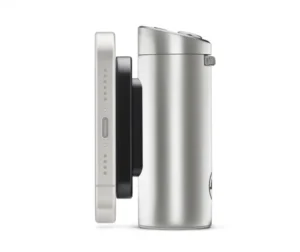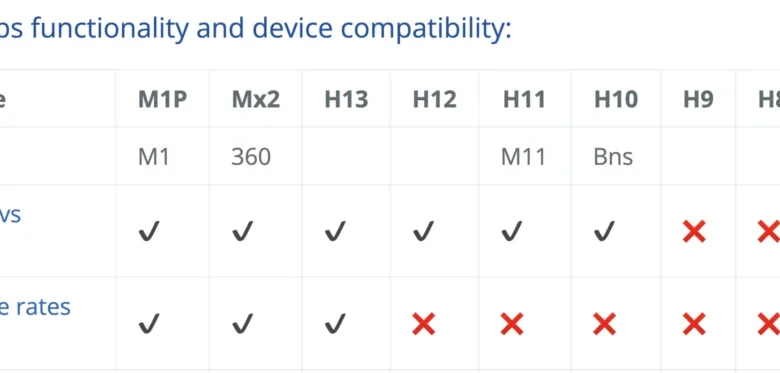
The release of the GoPro Mission 1 Pro ILS, retailing at an MSRP of $699.99 for the body-only configuration, has reignited a long-standing technical debate within the professional cinematography and broadcast communities. Despite advancements in camera technology and a growing industry consensus regarding metadata accuracy, the latest flagship offering from GoPro continues a trend of what some industry analysts have termed "framerate malpractice." This phenomenon, characterized by the misleading display of non-integer framerates as integer values within the camera’s user interface, persists even as competitors such as Blackmagic Design, Canon, Panasonic Lumix, and Sigma have moved toward transparent, high-precision menu labeling.
The Technical Discrepancy Defined
In the realm of professional video production, the distinction between integer and non-integer framerates is not merely academic; it is a fundamental requirement for synchronization, broadcast compliance, and post-production workflow integrity. The industry standard recognizes several distinct rates, including 23.976 (often referred to as 23.98), 24, 25, 29.97, 30, 50, 59.94, and 60 frames per second (fps).
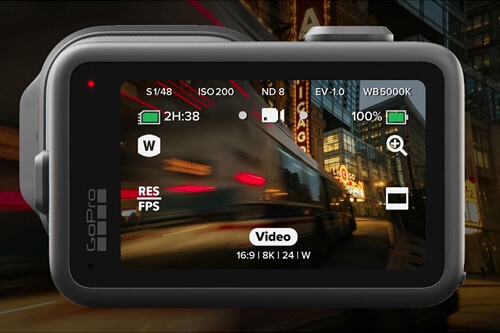
The issue with the GoPro Mission 1 Pro ILS lies in its menu system, which presents non-integer rates—such as 23.976 or 59.94—without the necessary decimal precision, effectively labeling them as their integer counterparts. For a professional editor or a live broadcast engineer, this mislabeling creates significant friction. When a camera incorrectly reports its capture rate to a non-linear editing system (NLE) or a switcher, it can lead to dropped frames, audio-visual desynchronization, and the need for time-consuming re-interpretation of footage during the ingest process. While consumer-grade hardware may prioritize simplicity, the "Pro" designation in the Mission 1 Pro ILS implies a level of professional utility that, according to industry experts, is currently compromised by these software choices.
Historical Context and Industry Standards
The roots of the current framerate landscape are deeply tied to the history of television broadcast. The 23.976, 29.97, and 59.94 rates are legacy standards derived from the NTSC color television signal, which required a slight reduction in speed to accommodate the subcarrier frequency for color information. Conversely, the 25 and 50 fps standards remain the bedrock of former PAL and SECAM regions.
In recent years, the industry has seen a push for greater transparency. Manufacturers have increasingly adopted the practice of displaying rates to two decimal places within camera menus. This transparency allows operators to verify immediately whether they are shooting in a broadcast-compliant mode or an exact integer mode (such as 24.00 fps for DCI digital cinema or 60.00 fps for high-frame-rate gaming and web content). GoPro’s persistence in masking these nuances suggests a design philosophy that favors an abstracted, "easy-to-use" interface over the granular control required by professional production houses.
The Role of GoPro Labs and User-Level Solutions
For those who require strict adherence to standard framerates, the current workaround involves the use of the GoPro Labs platform. This open-source-adjacent initiative provides users with specialized firmware and QR code-based configuration tools that can "hack" or override the default, restricted framerate settings of the camera.
While GoPro Labs offers a sophisticated set of tools for power users, its existence as an "optional" download highlights a structural divide. Professional operators argue that a camera marketed as a "Pro" device should provide access to these industry-standard rates natively, without requiring the user to navigate experimental software or external modifications. The reliance on such workarounds adds an unnecessary layer of risk for production environments where hardware reliability is paramount.
Broader Implications for the Professional Workflow
The implications of this framerate ambiguity extend beyond the camera settings. In multi-camera productions where a GoPro is used as a secondary or "crash" camera, it is often placed alongside high-end cinema cameras from manufacturers like RED or Sony. When the GoPro’s output does not match the metadata of the primary cameras, the burden of reconciliation falls on the digital imaging technician (DIT) or the assistant editor.
Consistency is the golden rule of production. If a project is set to a specific base framerate, every device in the chain must adhere to that rate. When a device hides its true capture rate, it introduces the potential for human error. A producer might select "30 fps" on the camera’s menu, assuming they are capturing exact 30.00 fps for a web-native project, only to find the camera is actually outputting 29.97 fps. While modern software is capable of handling these discrepancies, the resulting file handling—including frame interpolation or re-timing—can degrade image quality and increase rendering times.
The Path Forward: A Call for Firmware Updates
Industry observers and professional users have called upon GoPro to address these concerns through a standard firmware update. Such an update would not need to overhaul the camera’s hardware; it would simply require a change in how the software presents the available capture rates in the user interface.
By labeling the existing non-integer rates with their accurate decimal values, GoPro could align itself with the standards set by its peers. Furthermore, providing native access to all standard frame rates—rather than a curated subset—would solidify the company’s standing among professional cinematographers. The cost of such an implementation is negligible compared to the long-term benefit of user trust and operational efficiency.
Understanding the Spectrum of Frame Rates
To clarify the current landscape for production teams:
- 23.976 / 29.97 / 59.94 fps: These remain the standard for traditional television broadcast in North America and regions formerly utilizing NTSC standards.
- 25 / 50 fps: These are the essential standards for the vast majority of the world that operated on PAL or SECAM systems.
- 24.00 / 30.00 / 60.00 fps: These represent exact integer rates. 24.00 is the gold standard for cinematic projection (DCI), while 30.00 and 60.00 have become the de facto standards for live streaming, gaming content, and modern web-native distribution.
The confusion arises when these categories are collapsed into a single, inaccurate menu list. The objective is not to force all cameras to shoot everything, but to ensure that when a setting is selected, the output matches the professional expectation of that label.
Conclusion
As the GoPro Mission 1 Pro ILS establishes its place in the market, the conversation surrounding its framerate handling serves as a microcosm of the tension between consumer ease-of-use and professional technical rigor. While the camera boasts impressive image quality and durability, the "Pro" label carries an expectation of transparency. For a company that has successfully moved from the action-sports niche into the mainstream professional production market, aligning software interfaces with industry-standard terminology is a necessary evolution.
Until such an update is provided, production teams must continue to exercise caution, treating the camera’s internal menu as a starting point rather than a definitive source of truth. The request for change is clear: transparency in metadata is not a luxury, but a fundamental requirement for the modern digital workflow.
FTC Disclosure: The analysis presented in this report is independent. No manufacturers mentioned in this text have provided financial compensation for this article. Some industry entities may have engaged in past consulting work with technical contributors, but these relationships do not influence the factual reporting of technical specifications or industry standards. Allan Tépper’s analysis remains impartial and is based on current hardware testing and professional production workflows.