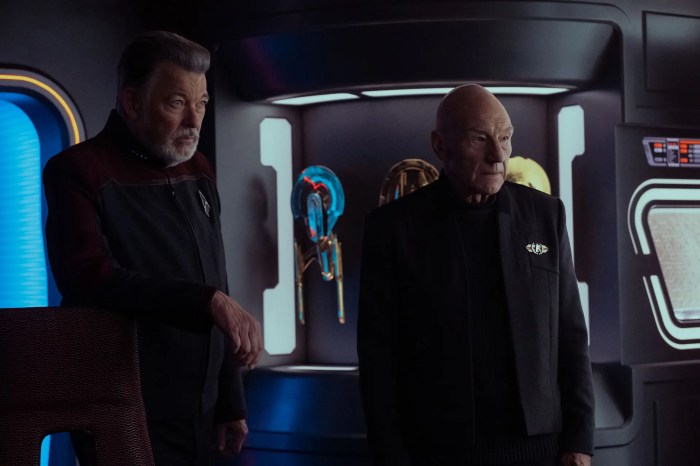
Star trek picards michael dorn and jonathan frakes share thoughts on their roles possibly being recast someday – Star Trek Picard: Michael Dorn and Jonathan Frakes share thoughts on their roles possibly being recast someday, sparking a fascinating debate among fans. This exploration delves into the potential motivations behind such a move, analyzing the impact on the franchise’s legacy and the diverse reactions from the passionate Star Trek community. The actors’ long-standing contributions to the series and the characters they embody are key factors in understanding the potential ramifications.
The discussion considers various potential scenarios, from plot-driven recasting to exploring the broader implications on the continuity and perception of the Star Trek universe. A deeper look at the historical precedent of recasting in other popular franchises is also examined, drawing parallels and contrasting them with the Star Trek context.
Background on the actors and their roles
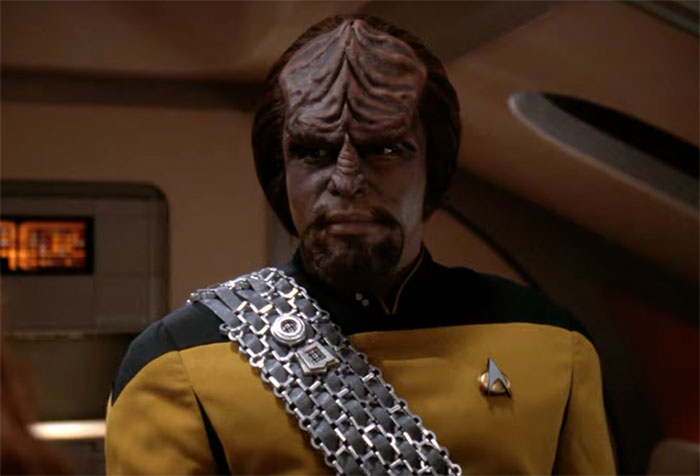
Michael Dorn and Jonathan Frakes, two pillars of Star Trek: The Next Generation, have left an indelible mark on the franchise. Their portrayals of Worf and Commander Riker, respectively, transcended the screen to become iconic figures, shaping the public’s perception of Starfleet and the galaxy far, far away. Their characters’ development and enduring appeal continue to resonate with fans today, even as the discussion of potential recasting arises.Their impact extends beyond their roles as individuals; they are key components of a larger narrative tapestry that continues to captivate and inspire new generations of science fiction enthusiasts.
Their influence is undeniable and contributes significantly to the overall legacy of Star Trek.
Michael Dorn and his portrayal of Worf
Worf, the Klingon warrior, was a pivotal character in Star Trek: The Next Generation. Dorn’s portrayal of Worf was groundbreaking. His performance captured the complexities of a Klingon’s internal conflict between his cultural heritage and his evolving respect for the ideals of Starfleet. Dorn’s nuanced performance brought depth and humanity to a character often portrayed as a stoic, almost one-dimensional warrior.
The character’s growth from a rigidly adhering Klingon to a more open-minded individual, grappling with internal conflicts, resonated with viewers. His contributions to the show and the franchise are significant.
Jonathan Frakes and his portrayal of Commander Riker
Commander Riker, the stoic yet charismatic first officer of the USS Enterprise-D, was a character defined by his duality. Jonathan Frakes, the actor, perfectly captured this dichotomy. Riker’s complex internal struggles, his unwavering loyalty, and his often-conflicted nature were brought to life through Frakes’s performance. The character’s emotional depth and the subtle nuances of his expressions and reactions were critical to the success of the series.
His character is deeply ingrained in the collective memory of Star Trek fans.
Significance of these characters within the franchise
These two characters, Worf and Riker, were integral to the success and enduring appeal of Star Trek: The Next Generation. They were more than just supporting characters; they were central to the show’s exploration of human nature, cultural differences, and the challenges of diplomacy in a diverse galaxy. Their roles provided the series with an emotional depth and conflict that elevated the show beyond a simple space opera.
Impact on the overall Star Trek universe
Michael Dorn and Jonathan Frakes’s performances have significantly impacted the overall Star Trek universe. Their characters, Worf and Riker, have become iconic representations of both Klingons and Starfleet officers. Their contributions helped to shape the public perception of these groups and broadened the scope of the franchise’s themes and characters. Their influence continues to be felt in subsequent Star Trek productions.
Public Perception of the actors and their characters
Worf and Riker, through Dorn’s and Frakes’s performances, have garnered a substantial and loyal following. Worf’s initial portrayal as a stoic Klingon warrior, contrasted with his evolving understanding of humanity, has become a fan favorite. Riker’s complexity, his internal conflicts, and his often-contradictory nature have made him a complex and relatable character. Both actors have cultivated a positive public image associated with their performances.
Comparison of Actors’ Roles and Significance
| Actor | Role | Significance | Impact | Public Perception |
|---|---|---|---|---|
| Michael Dorn | Worf | Complex Klingon character with internal conflict, embodying cultural differences and evolving understanding of humanity. | Defined a new dimension for Klingon characters and broadened the show’s exploration of cultural diversity. | Positive image associated with a stoic yet complex and relatable character. |
| Jonathan Frakes | Commander Riker | First officer with a duality of stoicism and charisma, showcasing internal struggles and loyalty. | Created a nuanced and compelling character who represented the complexities of human nature. | Positive image associated with a charismatic yet conflicted and relatable character. |
Possible Motivations for Recasting
The prospect of recasting beloved characters like Picard, Riker, and Worf in future Star Trek productions is a complex issue, sparking debate among fans and sparking intriguing discussions. The question isn’t just about replacing actors, but about how such changes might affect the established narrative and the enduring appeal of the franchise. The potential motivations for recasting are diverse and require careful consideration of the various factors at play.Recasting in a long-running franchise like Star Trek can stem from a multitude of factors.
Michael Dorn and Jonathan Frakes, reflecting on their Star Trek: Picard roles, sparked thoughts about potential recasting. It’s a fascinating parallel to the recent buzz surrounding the 9 1 1 Lone Stars cast reunion, as discussed in this insightful article on the potential for more cast reunions: 9 1 1 lone stars gina torres opens up about that big suits reunion and whether more are on the way.
Ultimately, the question of whether these iconic characters could be brought back, in a new generation of actors, is intriguing and will likely generate discussion for quite a while.
These include the actors’ personal choices, creative direction shifts, or the need to reflect evolving cultural sensibilities. Moreover, storylines requiring significant character arcs or age-related changes could necessitate a transition to a different actor to properly represent the characters.
Potential Storylines Requiring Recasting
Several storylines could trigger the need for recasting. A significant plot point involving a character’s death or severe injury might necessitate a recast to allow the narrative to progress with a new actor. Furthermore, a character’s aging could make the original actor unsuitable for the physical demands or emotional portrayals required by the storyline. The desire to explore new perspectives or explore the characters’ evolution in later stages of their lives might also lead to recasting decisions.
For instance, if a character undergoes a radical transformation in their ideology or physical condition, the new actor could more accurately portray these changes.
Potential Fan Reactions to Recasting
Fan reaction to recasting is a significant consideration. There’s often a strong emotional connection between fans and the actors they’ve come to know and love. The prospect of a new actor portraying a beloved character can trigger concerns about the integrity of the character’s portrayal or the potential dilution of the established legacy. However, fans might also appreciate a recast if it’s done well, allowing the character to evolve and adapt to new challenges and circumstances.
A thoughtful and well-executed recast can even enhance the character’s depth and resonance.
Comparison of Recasting Scenarios
Different scenarios for recasting could yield varied outcomes. For instance, recasting a character who has been deceased could be met with apprehension, potentially leading to a divisive response among fans. However, recasting a character in a later stage of their life, with the actor accurately capturing the character’s growth and wisdom, could resonate positively. Moreover, recasting a character who has undergone a significant physical transformation could be a necessary and well-received solution.
Michael Dorn and Jonathan Frakes from Star Trek: Picard pondering a potential recast of their roles is interesting, isn’t it? It makes you wonder about the casting choices for other shows, like the Blue Bloods family dinners. Why is Donnie Wahlberg seemingly the only one actually eating during those iconic scenes? Perhaps it’s a subtle commentary on the show’s overall themes.
Check out this article to find out more about Donnie Wahlberg’s unique dining habits in the Blue Bloods family dinners: why donnie wahlberg is often the only blue bloods cast member really eating in those infamous family dinner scenes. Regardless, the potential for recastings in Star Trek: Picard remains a fascinating topic.
The table below illustrates some of these scenarios.
| Scenario | Plot Point | Fan Reaction |
|---|---|---|
| Character Death/Injury | The original actor is unavailable due to a character death or injury, requiring a new actor to carry on the storyline. | Potentially mixed reactions. Some may find the recast disrespectful to the original portrayal, while others might accept it as a necessary narrative device. |
| Character’s Aging | The original actor is no longer suitable to portray the character’s advanced age, necessitating a recast. | Likely acceptance if the new actor effectively portrays the character’s wisdom and experience, while concerns may arise if the recast fails to capture the essence of the character. |
| Character Transformation | A character undergoes a major change in appearance or personality, necessitating a recast. | May be well-received if the new actor successfully embodies the new character attributes. Concerns about maintaining the character’s essence are also likely. |
Public Reaction and Speculation
The possibility of recasting Picard, Riker, and Data has ignited a fervent debate among Star Trek fans, sparking a wide range of opinions and passionate discussions online. The prospect of changing the iconic actors’ portrayals evokes a complex mix of nostalgia, anxiety, and anticipation. This analysis delves into the public’s response, examining the arguments for and against recasting, and the varied perspectives expressed across online platforms.The Star Trek franchise holds a special place in popular culture, and the actors who embody these iconic characters have become synonymous with their roles.
The very idea of replacing them prompts a significant emotional response from fans, who often have deeply personal connections to the characters and actors. Consequently, the discussions surrounding recasting are not just about the characters themselves, but also about the legacy of the franchise and the actors who shaped it.
The Star Trek: Picard actors Michael Dorn and Jonathan Frakes pondering a potential recast of their roles is interesting, especially given the recent discussion around diversity in media. It got me thinking about the whole debate surrounding Kim Kardashian’s Harvard speech – a fascinating parallel. A Harvard professor’s insightful perspective on the value of such appearances, as detailed in this article harvard professor explains why it actually did make sense to let kim kardashian speak at the university despite backlash , suggests that sometimes, challenging conventional notions can lead to valuable dialogue.
Ultimately, the question of whether Dorn and Frakes’ characters should be recast boils down to how the show handles the transition and maintains the core spirit of the franchise.
General Sentiment
The general sentiment surrounding the potential recasting is mixed. While some fans are open to the idea, seeing it as a way to refresh the series or explore new perspectives, others are staunchly opposed, fearing a dilution of the beloved characters’ essence. A significant portion of the online discourse centers around the actors’ performances, their cultural impact, and the perceived value of their established roles.
Public Comments and Opinions
Public comments and opinions are diverse, spanning from outright rejection to cautious acceptance. Some argue that the established actors have perfectly embodied their characters and that any change would diminish the franchise’s integrity. Others believe that recasting could breathe new life into the characters, allowing for fresh interpretations and new perspectives. Many fans cite the significant emotional connection they feel to the original portrayals, emphasizing the importance of preserving the established legacy.
Online Discussions and Social Media Activity
Online discussions, primarily on social media platforms, are rife with fervent arguments. Fan forums, dedicated subreddits, and Twitter threads are filled with posts expressing various viewpoints. These discussions often delve into the nuances of the characters, analyzing their development across the series and highlighting the specific qualities that fans appreciate in the actors’ performances. The emotional investment fans have in these characters is palpable in the intensity of these conversations.
Different Opinions and Perspectives
Diverse perspectives exist regarding recasting. Some fans are nostalgic, emphasizing the importance of preserving the original portrayals. Others, who may be younger fans or newcomers to the franchise, see the potential for recasting to attract new audiences and inject fresh energy into the stories. A significant segment of the public seems to focus on the characters’ iconic status and the emotional impact the original actors have had on them.
Arguments for and Against Recasting, Star trek picards michael dorn and jonathan frakes share thoughts on their roles possibly being recast someday
The main arguments for recasting often revolve around the potential for fresh interpretations and new perspectives. Advocates believe that recasting can introduce new elements to the characters, bringing in diverse talent and expanding the franchise’s appeal to a wider audience. The arguments against recasting typically center around the established actors’ iconic portrayals and the fear of losing the unique essence of the characters.
Many fans cite the actors’ performances as being essential to the characters’ success and believe that recasting would diminish the overall quality of the franchise.
Public Response Analysis
| Viewpoint | Argument | Supporting Evidence |
|---|---|---|
| Support Recasting | Recasting can bring fresh perspectives and attract new audiences. | Discussions online suggest a desire for new interpretations and an expansion of the franchise’s appeal. |
| Oppose Recasting | Original portrayals are irreplaceable and recasting would diminish the characters’ integrity. | Fan comments frequently emphasize the emotional connection to the established actors and the characters they portrayed. |
| Cautious Acceptance | Recasting could be acceptable under specific circumstances, such as a compelling narrative or an actor who could embody the character effectively. | Some online discussions show a willingness to consider recasting if the new actor meets certain criteria or if the storyline warrants it. |
Historical Precedent for Recasting: Star Trek Picards Michael Dorn And Jonathan Frakes Share Thoughts On Their Roles Possibly Being Recast Someday
The prospect of recasting iconic roles in beloved franchises like Star Trek, particularly for characters as deeply ingrained as Picard, Riker, and Worf, inevitably sparks debate. Examining past recasting efforts offers valuable insights into the potential outcomes and the factors that influence success or failure. Understanding these precedents helps contextualize the current discussion about recasting in Star Trek.Recasting a beloved character often triggers passionate reactions, ranging from enthusiastic acceptance to fervent opposition.
The decision to recast is rarely simple and often carries significant weight, influencing not only the immediate future of the franchise but also its legacy. The success or failure of a recast hinges on many factors, including the actor’s performance, the character’s evolution, and the audience’s reception.
Similar Cases of Recasting in Popular Franchises
Several popular franchises have grappled with the decision to recast key roles. These instances offer a range of outcomes, from positive reception to widespread criticism. Analyzing these examples reveals patterns and considerations that apply to the current Star Trek debate.
Successful Recasting Attempts
Successful recasting often involves a thoughtful approach to character evolution and a strong performance from the new actor. The new actor must effectively embody the character’s essence while bringing a fresh perspective.
- The “Indiana Jones” franchise saw a change in the lead role following Harrison Ford’s return in the fourth film. The change was executed seamlessly, as the new actor maintained the character’s spirit and charm. This highlights how careful casting and character continuity can ensure a positive outcome. Furthermore, the continuity between the previous actors and the new one played a critical role in maintaining the franchise’s essence and identity.
- The “James Bond” franchise has frequently seen new actors take on the iconic role. While each new actor brings their own interpretation, the franchise has maintained its core identity and appeal. The continuity in the character’s core values and attributes, combined with the ability of each new actor to embody those values, contributed to the franchise’s ongoing success.
Unsuccessful Recasting Attempts
Unsuccessful recasting often stems from a disconnect between the new actor and the character’s established persona. The new actor’s performance may not resonate with audiences, or the character’s evolution might not be well-received.
- The “Batman” franchise saw varying levels of success with recastings. In some cases, the new actors failed to capture the essence of the character, resulting in a less-than-stellar reception. This underscores the need for a deep understanding of the character and the ability to effectively portray their core values and personality. The new actor’s interpretation must resonate with the audience, or the result will be underwhelming.
Factors Influencing Success or Failure
The outcome of a recast hinges on several key factors: the character’s legacy, the new actor’s performance, and the audience’s response.
- Character Legacy: A deeply ingrained character with a strong legacy requires a new actor to understand and respect the established persona. This requires a meticulous approach to continuity and a commitment to embodying the character’s core values.
- Actor’s Performance: The new actor must effectively embody the character’s essence and resonate with the audience. A convincing performance that captures the character’s spirit is crucial.
- Audience Reception: The audience’s response often plays a pivotal role. If the new actor fails to capture the character’s essence or if the character’s evolution is not well-received, the recast can fail. This demonstrates the significance of audience engagement and understanding the public perception of the character and the franchise.
Table Comparing and Contrasting Recasting Attempts
| Franchise | Character | Outcome | Reasons |
|---|---|---|---|
| Indiana Jones | Indiana Jones | Successful | Strong continuity, character essence maintained, new actor’s performance |
| James Bond | James Bond | Successful | Continuity in core values, each actor’s ability to embody them |
| Batman | Batman | Mixed | Varying interpretations, some actors failing to capture the character’s essence |
Final Thoughts
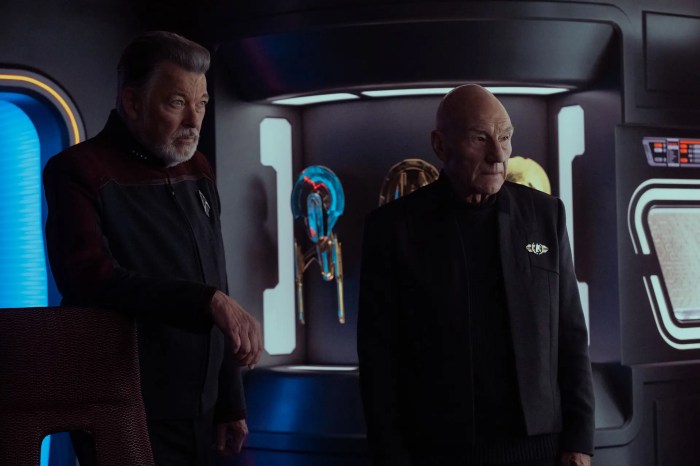
In conclusion, the prospect of recasting iconic characters like Worf and Riker in Star Trek Picard is undeniably complex. The actors’ reflections, combined with the fans’ passionate opinions, paint a vivid picture of the potential benefits and drawbacks of such a decision. The franchise’s rich history, along with the public’s reaction, will ultimately shape the future of these beloved characters.
This discussion highlights the delicate balance between honoring tradition and embracing change within a beloved science fiction franchise.