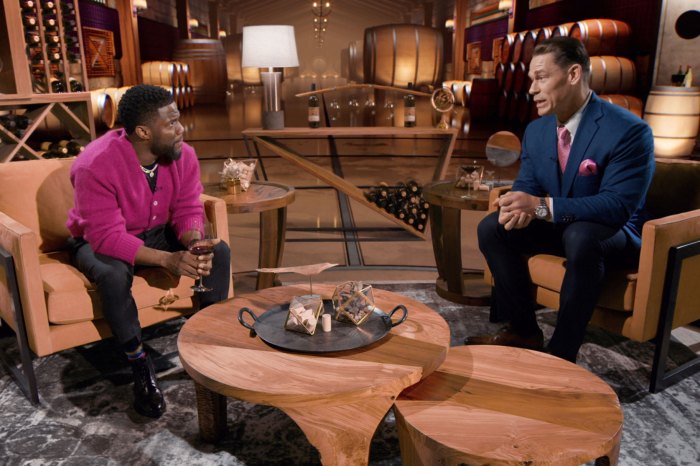
Kevin Hart compares The Rock to John Cena as creative collaborators, offering a fascinating look at their contrasting approaches to teamwork. Hart’s perspective delves into their strengths and weaknesses in collaborative environments, exploring how these differences impact their projects. He examines the context behind his comments and the possible motivations behind this comparison.
This analysis goes beyond surface-level observations, exploring the specific examples that shaped Hart’s opinions. It also contrasts The Rock’s and John Cena’s collaborative styles, detailing their respective approaches to working with directors, writers, and co-stars. Tables illustrate these differences, highlighting key characteristics of each actor’s collaborative spirit.
The Rock’s Approach to Collaboration: Kevin Hart Compares The Rock To John Cena As Creative Collaborators

Dwayne “The Rock” Johnson’s career transcends mere acting; it’s a testament to his exceptional collaborative spirit. He consistently demonstrates a willingness to engage with everyone involved in a project, fostering an environment where creativity thrives and shared success is the ultimate goal. His approach is not simply about fulfilling contractual obligations; it’s about actively contributing to the overall creative vision.The Rock’s collaborative style differs significantly from other actors.
He’s not just a performer; he’s a vital component of the creative process, actively seeking to understand the project’s nuances and offering insightful suggestions. This proactive engagement, as opposed to a more passive approach, sets him apart and often leads to superior outcomes. His ability to connect with and understand the perspectives of those around him makes him a truly effective collaborator.
The Rock’s Collaborative Style
The Rock’s collaborative style is characterized by a profound respect for the creative process. He actively listens to the input of directors, writers, and co-stars, often incorporating those suggestions into the final product. This collaborative approach extends to every aspect of the project, from script development to on-set execution. He recognizes that the success of a project is dependent on the combined efforts of the entire team.
Examples of Collaboration, Kevin hart compares the rock to john cena as creative collaborators
The Rock consistently demonstrates his collaborative spirit in various projects. In “Jumanji: Welcome to the Jungle,” for instance, he worked closely with the director to develop his character’s comedic timing and interactions with the other actors, leading to a highly successful film. His willingness to adjust his performance based on the needs of the narrative underscores his commitment to the overall success of the project.
Similarly, in “Central Intelligence,” his collaborative spirit with Kevin Hart, the film’s co-star, helped to establish a strong dynamic that was a key component of the film’s success. This willingness to adapt and support others is central to his collaborative style.
Collaboration with Different Roles
| Collaboration Role | The Rock’s Approach (Example) |
|---|---|
| Director | Open to direction, respects the vision, offers input constructively (e.g., suggesting alternative takes or approaches that align with the character’s development). |
| Writer | Willing to contribute to the script, provide feedback, suggest improvements to dialogue or scenes (e.g., offering insights based on his own experiences or observations). |
| Co-star | Supports the performance of others, encourages a collaborative atmosphere (e.g., suggesting ways to enhance comedic timing or emotional depth in scenes involving multiple characters). |
John Cena’s Approach to Collaboration
John Cena, a consistently successful figure in professional wrestling and the entertainment industry, has cultivated a distinct approach to collaboration. Unlike The Rock’s often more assertive and demanding style, Cena’s method leans towards a measured, supportive, and often highly receptive approach, making him a valuable asset in various creative partnerships. This collaborative style, while sometimes less overtly dynamic, has proven remarkably effective in achieving shared goals and building strong professional relationships.Cena’s collaborative nature is rooted in a willingness to listen and adapt, often prioritizing the overall project’s success over individualistic displays.
He’s a performer who values the input of others, but not at the expense of his own performance. This balanced approach allows him to contribute meaningfully while maintaining a strong sense of self.
Kevin Hart’s comparison of The Rock and John Cena as creative collaborators is interesting, but it makes me think about how even seemingly disparate creative endeavors can have surprising parallels. Like, imagine James Cameron, crafting the epic visuals of Avatar: The Way of Water, and adding a Titanic nod without realizing he’d already written it for Jack – that’s a fascinating creative loop, mirroring the unique dynamic between The Rock and John Cena, who seem to bring their own distinct talents to collaborations.
It highlights the unexpected ways creativity can intertwine, doesn’t it? James Cameron added a Titanic nod to Avatar: The Way of Water without realizing he’d already written it for Jack. It really gets you thinking about how the creative process can sometimes repeat itself, or subtly echo other works. Back to Hart’s point, it’s still cool how they find common ground.
Cena’s Collaborative Style in Different Roles
Cena’s collaborative approach manifests differently depending on the specific role within a project. He demonstrates a strong ability to adapt to the needs of various collaborators, whether directors, writers, or fellow actors.
| Collaboration Role | John Cena’s Approach (Example) |
|---|---|
| Director | Cena often listens attentively to a director’s vision, striving to embody the intended character and narrative. He might require further clarification or direction to fully understand the nuances of the role, but he generally adheres to the director’s creative choices. For instance, in a film where the director wants a specific tone, Cena will often diligently seek to understand and implement that tone within his performance. |
| Writer | While Cena might offer feedback on a script, he typically doesn’t take a proactive role in rewriting or fundamentally altering the material. His contributions often focus on refining existing ideas and ensuring the script aligns with the character’s arc. Examples of this include scenes where the character needs a particular tone or emotional arc, where Cena will seek to understand and execute it as written. |
| Co-star | Cena’s collaborative spirit with co-stars is usually characterized by mutual support and respect for each other’s performances. He focuses on delivering his own performance effectively, creating a synergy that enhances the overall narrative, without overshadowing other actors’ roles. Examples include scenes in films where the narrative requires a delicate balance between the actors’ performances. |
Examples of Cena’s Collaboration
Cena’s collaborative nature has manifested in numerous projects throughout his career. In the 2009 film, “12 Rounds,” Cena’s character, a highly focused, dedicated athlete, needed a specific degree of physicality and intensity. Working with the director, he tailored his performance to ensure the character’s motivation and drive were effectively communicated. In the wrestling ring, Cena’s collaboration with various opponents has resulted in some of the most iconic and memorable matches in professional wrestling history, highlighting his ability to adapt and respond to the needs of his partners.
Impact of Collaboration on Success
The interplay between collaborative styles and project success is a fascinating dynamic. Different approaches to teamwork can significantly impact the final product, whether it’s a blockbuster movie, a groundbreaking scientific discovery, or a thriving business venture. Understanding how these approaches manifest and interact is crucial for maximizing positive outcomes and mitigating potential conflicts.Collaboration, at its core, is about leveraging diverse perspectives and skills to achieve a shared goal.
This often means navigating varying personalities, communication styles, and working methodologies. The degree to which these elements are harmonized dictates the project’s trajectory – from a seamless, productive process to a frustrating, unproductive one. The effectiveness of collaboration directly correlates with the success rate of the project.
Collaborative Styles and Project Outcomes
Different collaborative styles inevitably lead to different project outcomes. A highly structured, directive approach might yield efficient results in some cases, but can stifle creativity and innovation in others. Conversely, a more fluid, adaptable style, while potentially fostering creative solutions, could result in delays or missed deadlines. The optimal collaborative style often depends on the specific project’s requirements and the personalities involved.
For example, a project requiring meticulous attention to detail might benefit from a more structured approach, whereas a project demanding creative problem-solving might thrive under a more fluid collaborative style.
Examples of Successful and Unsuccessful Collaborations
Examining successful and unsuccessful collaborations provides valuable insights into the role of collaborative styles. Consider the diverse projects undertaken by Dwayne “The Rock” Johnson. His collaborative approach, often characterized by clear communication and a shared vision, has consistently resulted in successful projects. He is known for actively listening to input from his collaborators, creating a sense of trust and mutual respect.
Conversely, a less successful collaborative project might involve a lack of communication, differing priorities, or a fundamental clash in working styles. In contrast, John Cena’s collaborations, while sometimes yielding successful results, could often lack the same level of flexibility and adaptability.
Importance of Communication and Mutual Respect
Effective communication and mutual respect are paramount in collaborative environments. Clear communication channels ensure that everyone is on the same page, fostering a shared understanding of goals and expectations. Respect for diverse perspectives and contributions is equally crucial. A collaborative environment where team members feel valued and heard is more likely to produce innovative solutions and deliver high-quality results.
When these elements are absent, misunderstandings and conflicts can easily arise, hindering the project’s progress and potentially leading to its failure.
Synergy in Relation to Collaboration
Synergy, in the context of collaboration, refers to the combined effect of the collaboration being greater than the sum of its individual parts. When different individuals with unique skills and perspectives work together effectively, they can generate solutions or outcomes that are far superior to what they could achieve individually. This often results in increased creativity, innovation, and efficiency.
A successful collaborative effort can generate solutions beyond what any one person could imagine on their own. The synergy produced from a successful collaborative project can be seen in the success of numerous Hollywood productions where multiple creators combine their unique strengths.
Public Perception of the Comparison
Kevin Hart’s comparison of The Rock and John Cena’s collaborative approaches sparked considerable public discussion, reflecting differing opinions and interpretations. The comparison, while seemingly straightforward, triggered a complex web of reactions, showcasing the nuanced perceptions surrounding both performers’ careers. This analysis delves into the public’s varied responses to the comparison, examining the different perspectives and their impact on the image of both stars.The comparison, inherently subjective, invited a spectrum of reactions.
Some viewers resonated with Hart’s observations, finding them insightful or amusing, while others viewed the comparison as superficial or unfair, potentially contributing to pre-existing biases. The overall public reaction to Hart’s comparison, therefore, reveals a blend of agreement, disagreement, and critical analysis.
Public Reactions and Perspectives
The public’s reaction to Hart’s comparison was diverse, encompassing various perspectives. Some fans appreciated Hart’s ability to highlight the different collaborative styles, finding the comparison engaging and thought-provoking. Others, however, viewed the comparison as a simplification of complex personalities and career trajectories. It’s important to recognize that these varying perspectives stemmed from individual experiences, pre-existing opinions, and interpretations of Hart’s comments.
Different Interpretations of the Comparison
The public’s interpretation of the comparison was multifaceted. Some saw it as a fair evaluation of the actors’ collaborative strategies, while others perceived it as a superficial attempt to contrast two distinct careers. A significant portion of the public perceived the comparison through the lens of their existing admiration or dislike for either The Rock or John Cena.
Examples of Public Discourse
Online forums, social media platforms, and news articles showcased a range of public discourse regarding Hart’s comparison. Discussions frequently highlighted specific instances of The Rock and John Cena’s collaborations, contrasting their approaches and evaluating their impact on each project. Some comments praised Hart’s ability to identify distinct collaborative styles, while others criticized the comparison for potentially overshadowing the unique contributions of each performer.
Furthermore, the debate sometimes shifted towards general opinions about the two actors, adding another layer of complexity to the discussion.
Impact on Perception of The Rock and John Cena
The comparison’s impact on public perception of The Rock and John Cena varied depending on individual viewpoints. For some, it reinforced existing notions about each performer’s approach to collaboration, potentially highlighting the differences in their styles. Conversely, others felt the comparison could have led to a more nuanced appreciation of the individuals’ careers, prompting reflection on their distinct methods and contributions.
Overall, the comparison likely contributed to the already existing perceptions of both actors, rather than fundamentally altering them.
Final Conclusion

Ultimately, Hart’s comparison sheds light on the crucial role collaboration plays in project success. The discussion highlights how different collaborative styles can lead to varying outcomes. Examples of successful and unsuccessful collaborations are explored, demonstrating the importance of communication and mutual respect within a team. The public’s reaction to this comparison and the impact it had on the perception of both The Rock and John Cena are also examined, providing a comprehensive look at the dynamic of creative partnerships.