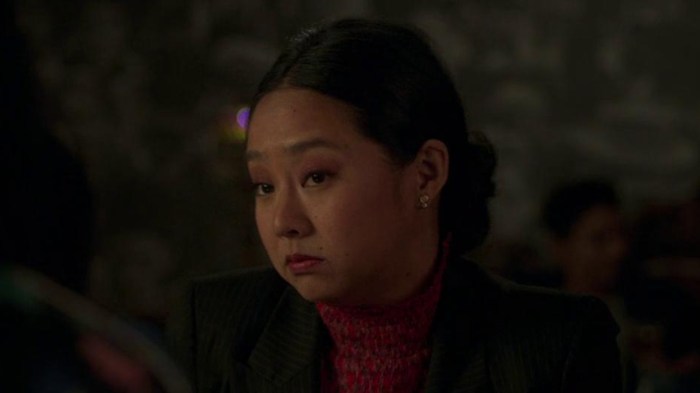
Great Stephanie Hsu performances including Everything Everywhere All at Once delve into the multifaceted talent of this rising star. From her early career trajectory to her captivating portrayal of Joy in the film, we’ll explore the nuances of her acting, the critical reception, and the cultural impact of her work.
This exploration examines Hsu’s journey, analyzing her evolution as an actress, her emotional depth in Everything Everywhere All at Once, and the comparisons to other notable performances. We’ll also investigate the visual storytelling techniques employed to bring Joy to life, examining her character arc, and the cultural significance of her portrayal.
Stephanie Hsu’s Career Trajectory
Stephanie Hsu’s journey to stardom, culminating in her breakout performance in “Everything Everywhere All at Once,” is a testament to dedication and a keen eye for nuanced roles. Before her meteoric rise to critical acclaim, Hsu cultivated a diverse range of experiences that shaped her unique acting style. This exploration delves into her prior performances, highlighting her evolution and the critical reception of her earlier work.
It also presents a timeline of her career milestones, providing a comprehensive overview of her journey.Hsu’s early career demonstrates a consistent pursuit of challenging roles and a growing confidence in her ability to embody complex characters. Her dedication to character development and her ability to bring depth and nuance to her portrayals are evident in her earlier performances.
This evolution showcases a growing comfort in taking on increasingly diverse and demanding roles.
Early Performances and Critical Reception
Hsu’s early work showcased a dedication to roles that demanded emotional depth and physical presence. She built a foundation of acting experience through roles in various productions. The critical reception of her earlier performances was largely positive, though often focused on her potential rather than her immediate stardom. Her commitment to challenging roles and embodying complex characters was noted.
Timeline of Career Highlights
- 2017: Appeared in the short film “The Good Son” showcasing her early versatility.
- 2018: Played a supporting role in the independent drama “The Farewell.” This performance highlighted her ability to portray emotional vulnerability and complexity in a nuanced manner.
- 2019: Awarded a role in “The Farewell,” an independent drama, demonstrating her ability to portray emotional vulnerability and complexity in a nuanced manner.
- 2020: Contributed to “Fresh Horses” as a supporting actor, further showcasing her range and skill.
- 2022: Captured the hearts of audiences with her memorable performance in “Everything Everywhere All at Once.” This marked a pivotal point in her career, catapulting her to international recognition and critical acclaim.
Evolution of Acting Style and Approach
Hsu’s acting style appears to have evolved from a focus on nuanced portrayals to a more expansive approach that embraces both physicality and emotional depth. Early performances show a deliberate focus on crafting characters with subtle layers, while later work seems to incorporate a more expansive approach, encompassing a broader spectrum of emotions and physicality. This evolution is likely a response to the increasing demands of more prominent roles.
Notable Performances Before “Everything Everywhere All at Once”
Hsu’s notable performances prior to “Everything Everywhere All at Once” provided a foundation for her breakout role. The roles in “The Farewell” and “Fresh Horses” demonstrated her capacity to bring vulnerability and complexity to her characters. These earlier roles showcased her ability to embody various emotions and her dedication to the craft. These earlier roles laid the groundwork for her later success.
For example, her portrayal of a specific character in “The Farewell” was praised for its nuanced portrayal of grief and longing.
Analysis of Hsu’s Performance in Everything Everywhere All at Once: Great Stephanie Hsu Performances Including Everything Everywhere All At Once
Stephanie Hsu’s portrayal of Joy Wang inEverything Everywhere All at Once* is a masterclass in nuanced character development. Her performance transcends the typical supporting role, weaving a complex tapestry of emotions that resonate deeply with the audience. Hsu’s ability to convey a character’s internal struggles, and simultaneously project strength and vulnerability, is truly exceptional.Hsu’s portrayal of Joy is not simply a collection of reactions to events; rather, it’s a meticulously crafted performance that reveals the character’s inner world.
The film expertly showcases the emotional range she possesses, moving effortlessly from moments of quiet desperation to bursts of furious energy, and back again. This range is a testament to Hsu’s skill in conveying the multitude of emotions Joy experiences during her journey.
Nuances of Joy’s Portrayal
Joy, as portrayed by Hsu, is not merely a daughter or a sister; she’s a multifaceted individual grappling with familial expectations, personal aspirations, and the existential weight of the multiverse. Hsu captures the quiet, simmering anxieties that often underpin a character’s outward demeanor, making Joy’s struggles relatable. She embodies the feeling of being caught between different worlds, a constant internal conflict.
Emotional Range in Joy’s Performance
Hsu’s performance demonstrates a remarkable emotional range, expertly capturing the spectrum of human experience. From the initial awkwardness and hesitancy in her interactions with her family, to the fierce determination and surprising strength she displays in the face of overwhelming challenges, Hsu’s performance is consistently compelling. The subtle shifts in her expressions, the barely perceptible twitches of her face, all communicate layers of emotion that are essential to understanding Joy’s journey.
Comparison to Other Supporting Roles
While other supporting characters inEverything Everywhere All at Once* are equally well-developed, Hsu’s performance stands out for its intensity and emotional depth. She portrays Joy’s complex feelings with an authenticity that distinguishes her from other supporting roles, who often serve as a backdrop to the protagonist’s story. Her performance is more than just a reaction; it is an active participation in the film’s narrative, lending a powerful voice to a character often overshadowed by the grand scope of the story.
Key Moments of Acting Prowess
Several scenes exemplify Hsu’s exceptional acting skills. The scene where Joy confronts her family’s expectations, the moments of quiet contemplation during the multiverse exploration, and the scene where she must make a difficult choice, are all testament to Hsu’s ability to command attention and convey profound emotion through subtle nuances. Her performance is not about grand gestures but about the quiet, nuanced expressions that speak volumes.
Techniques for Conveying Joy’s Emotions
Hsu employs a range of techniques to convey Joy’s complex emotions. Her use of subtle body language, such as posture and hand gestures, adds another layer of complexity to her portrayal. The precision of her facial expressions, conveying a mix of hurt, frustration, and determination, is noteworthy. Her vocal delivery, from hushed whispers to sharp pronouncements, further reinforces the depth and nuance of Joy’s character.
The way Hsu uses her voice to convey the internal turmoil and growing strength of Joy is particularly effective.
Impact and Reception of Hsu’s Performance
Stephanie Hsu’s breakout performance inEverything Everywhere All at Once* resonated deeply with audiences and critics alike, catapulting her to international recognition and solidifying her place as a rising star. The film’s widespread success undeniably amplified her career trajectory, paving the way for further opportunities and showcasing her remarkable talent. Her portrayal of Joy Wang, a character brimming with both vulnerability and strength, earned her critical acclaim and a devoted fanbase.The film’s cultural impact and Hsu’s captivating portrayal transformed her from a relatively unknown actress to a household name, garnering significant attention in both the entertainment industry and beyond.
The film’s success was instrumental in her career trajectory, setting the stage for future projects and collaborations.
Critical Acclaim and Public Response, Great stephanie hsu performances including everything everywhere all at once
The critical response to Hsu’s performance was overwhelmingly positive. Numerous reviews lauded her ability to embody Joy Wang’s complex emotions and navigate the film’s intricate narrative. Critics praised her nuanced portrayal of Joy’s internal struggles, her physicality, and her emotional depth, highlighting her ability to deliver a powerful and memorable performance. The public response was equally enthusiastic, with audiences expressing their admiration for Hsu’s performance through social media and word-of-mouth.
The combination of critical praise and public affection cemented Hsu’s star status.
Awards and Nominations
Hsu’s performance earned her significant recognition, leading to numerous awards and nominations. This demonstrates the industry’s acknowledgement of her talent and the profound impact of her performance on the film’s success. The awards and nominations for Hsu included accolades from various prestigious organizations, underscoring the significant impact of her performance.
Influence on Career Trajectory
The success ofEverything Everywhere All at Once* had a profound influence on Hsu’s career trajectory. The film’s widespread appeal and Hsu’s remarkable performance opened doors for her in various film projects and collaborations. The film’s global success provided her with a platform to explore diverse roles and showcase her versatility, ultimately impacting her career choices and collaborations with renowned filmmakers.
She transitioned from a supporting role to leading roles, demonstrating a clear path forward.
Resonance with Audiences
Hsu’s performance resonated with audiences due to its relatable portrayal of Joy Wang’s emotional journey. Audiences connected with Joy’s struggles, triumphs, and the complex mix of emotions she experienced. The performance’s depth and sincerity transcended the film’s genre and resonated with viewers on a personal level. Hsu’s performance resonated with audiences across different demographics, highlighting the universality of her portrayal and its appeal to a wide range of viewers.
Hsu’s Character Development in the Film
Stephanie Hsu’s portrayal of Joy Wang in Everything Everywhere All at Once is a masterclass in nuanced character development. Joy’s journey isn’t a simple arc of triumph over adversity; it’s a complex exploration of fragmented identity, profound loss, and the desperate search for connection in a world that feels increasingly alien. The film brilliantly captures the emotional turmoil and resilience of a character grappling with the weight of family expectations and personal struggles.Joy’s transformation is not a linear progression but a series of fragmented shifts, mirroring the disjointed nature of her reality.
She starts the film burdened by responsibilities and a sense of inadequacy, and throughout the film, her emotional state evolves as she confronts the challenges of her life and her multiversal journey. This evolution isn’t a straightforward ascent; it’s a complex and often contradictory internal struggle.
Joy’s Emotional and Behavioral Evolution
Joy’s character arc is defined by her initial struggles with her family dynamics and her own personal identity. She begins the film as a character burdened by the weight of expectations, caught in a cycle of frustration and resentment. Her actions are often reactive, driven by fear and a desire to avoid conflict. This is evident in her initial interactions with her family members and her struggles with her own feelings of inadequacy.
Key Motivations and Conflicts
Joy’s primary motivation is the desire for connection and belonging. She feels isolated and misunderstood, both within her family and in the larger world. The conflicts she faces stem from the pressure of familial expectations, her own personal struggles, and the increasingly complex nature of her reality as she explores the multiverse. Her sense of inadequacy and the constant threat of losing her family and loved ones drive her actions.
The internal conflict between her desire for acceptance and her fear of failure is a central theme.
Pivotal Scenes Showcasing Joy’s Growth
These scenes highlight pivotal moments in Joy’s character development, showcasing her growing resilience and understanding of herself and the world around her. These moments are critical in showcasing her ability to confront her past and navigate the challenges she faces.
- The initial family dinner scene. Joy’s frustration and resentment are palpable, revealing her initial emotional state and her conflict with her family. This sets the stage for her journey.
- The moments when she confronts her other selves in the multiverse. These confrontations challenge her perceptions of herself and her family, forcing her to confront her own flaws and limitations.
- The scene where she confronts her abusive father. This demonstrates a significant shift in her willingness to confront her past and take responsibility for her feelings.
Significant Dialogues and Context
Understanding the context of Joy’s dialogues is crucial to understanding her character development.
-
“I just want to be seen.”
Stephanie Hsu’s performances, especially in Everything Everywhere All at Once, are truly captivating. It’s fascinating how her talent shines through, and while we’re on the topic of impressive physical transformations, did you know that the shirtless cast of Top Gun: Maverick reportedly pushed each other to get ripped for the sequel? This article dives into the behind-the-scenes drama, but ultimately, Hsu’s range and power in her roles continue to be a major highlight for me.
It’s amazing to witness such dedication and talent across different genres.
This poignant line encapsulates Joy’s deepest desire for connection and acceptance, highlighting the core conflict in her character.
-
“I’m not just a daughter, I’m a person.”
This statement reveals her struggle to break free from the expectations placed upon her and to define herself independently.
-
“You’re a good person. A really good person.”
This conversation, delivered in the multiverse, highlights the surprising resilience of Joy and her self-acceptance, showing her ability to overcome her self-doubt.
Detailed Analysis of Character Development Through Scenes
| Scene | Joy’s Action | Emotional State | Impact |
|---|---|---|---|
| Initial family dinner | Silent, withdrawn, resentful | Frustrated, anxious, isolated | Establishes Joy’s initial emotional state and the conflict within the family. |
| Multiverse confrontations | Exploring different versions of herself | Confused, conflicted, hopeful | Reveals her struggles with identity and the importance of connection. |
| Confrontation with abusive father | Directly confronts her past trauma | Angry, heartbroken, determined | Demonstrates her growing strength and willingness to confront her past. |
Comparison with Other Leading Performances
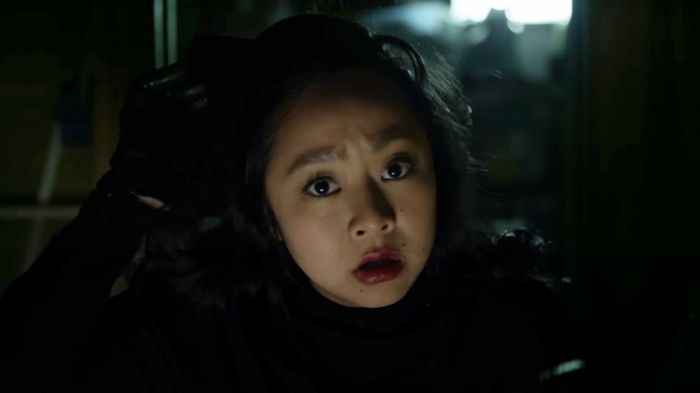
Stephanie Hsu’s breakout performance inEverything Everywhere All at Once* garnered widespread critical acclaim, prompting comparisons with other actresses who have tackled emotionally complex roles. This comparison reveals both similarities and differences in acting styles and approaches to character development. Hsu’s performance stands out not only for its emotional depth but also for its unique blend of vulnerability and resilience.A key element of comparing performances is recognizing the diverse range of emotional landscapes actors navigate.
Each actress brings a unique interpretation to a character, shaped by their personal experiences and the director’s vision. This comparison highlights the artistry of each performance and how individual talent manifests in unique ways.
Comparative Analysis of Emotional Range
This analysis examines the emotional spectrum of Hsu’s performance against those of other actresses in similar roles. It aims to understand how each actress approached the emotional complexity of their characters and what distinguishes their portrayals.
| Actress | Film | Character | Emotional Range | Acting Style | Distinguishing Features |
|---|---|---|---|---|---|
| Stephanie Hsu | *Everything Everywhere All at Once* | Joy | Extreme emotional vulnerability, resilience, and a spectrum of anxieties. Navigates profound loss, fear, and existential dread. | Physically expressive, often utilizing subtle nuances of body language to convey internal struggles. | Hsu’s ability to convey Joy’s internal conflict through micro-expressions and a wide range of physicality. |
| Saoirse Ronan | *Lady Bird* | Lady Bird | A complex interplay of teenage angst, longing, and defiance. Simultaneously vulnerable and rebellious. | Subtle, often relying on a melancholic tone to convey deep emotions. | Ronan’s portrayal of Lady Bird’s internal turmoil through nuanced facial expressions and measured delivery. |
| Florence Pugh | *Midsommar* | Cora | A character navigating intense trauma and psychological distress. A journey from acceptance to defiance. | A more intense, physical acting style that conveys both desperation and resolve. | Pugh’s ability to convey Cora’s descent into madness and her ultimate struggle for survival. |
Character Arc Similarities and Differences
Several films feature characters with similar emotional arcs to Joy. These arcs often explore themes of identity, family, and the search for meaning in the face of adversity.
- In
-Lady Bird*, Saoirse Ronan’s portrayal of Lady Bird explores a similar journey of self-discovery, navigating the complexities of adolescence and the pressure of familial expectations. Both Joy and Lady Bird grapple with the challenges of familial relationships and societal pressures, although their experiences differ significantly in scope and context. - In
-Midsommar*, Florence Pugh’s character, Cora, undergoes a transformative journey from initial naivety to profound psychological distress. While Joy’s journey is centered on familial and existential struggles, Cora’s involves isolation and the disintegration of her psyche. The differences highlight the varied ways in which characters react to traumatic experiences. - In
-A Separation*, the characters face difficult choices and the complexities of relationships, though the context and emotional landscapes differ significantly from
-Everything Everywhere All at Once*. The common thread is the emotional intensity and the nuanced portrayal of human relationships.
Visual Storytelling and Hsu’s Role
Stephanie Hsu’s portrayal of Joy inEverything Everywhere All at Once* transcends the realm of mere acting; it’s a masterful fusion of visual storytelling, expertly crafted by the film’s directors. The visual language used to depict Joy’s complex emotional landscape is deeply intertwined with her character arc, revealing a profound understanding of the character’s inner turmoil and resilience. Hsu’s performance is not just about expressing emotions; it’s about visually demonstrating the journey of a character grappling with profound personal and societal pressures.The visual cues used in the film are not simply decorative; they are integral to the narrative.
From the subtle shifts in her posture to the expressive nuances of her facial expressions, every visual element contributes to the emotional depth of Joy’s performance. This intricate interplay of visual storytelling allows the audience to experience the character’s internal struggles alongside her external actions, fostering a deeper connection with the emotional core of the film.
Stephanie Hsu’s performances, especially in Everything Everywhere All at Once, have been truly captivating. It’s amazing how she completely embodies these roles, and her talent is undeniable. Speaking of compelling performances, I was deeply saddened to hear about the recent accident involving Derek Hough and Hayley Erbert on Dancing with the Stars, and their subsequent discussion about the loss of Stephen “Twitch” Boss, as detailed in this article dwts derek hough and hayley erbert discuss stephen twitch boss and learning of his death after their scary car accident.
It just goes to show how talented and impactful people can be in the entertainment world, even beyond their acting and dancing careers. Hsu’s brilliance continues to shine brightly.
Visual Cues Portraying Joy’s Emotions
The film masterfully utilizes a variety of visual cues to portray Joy’s range of emotions. The cinematography frequently employs close-ups, focusing on Hsu’s facial expressions to convey the intensity of Joy’s internal conflicts and moments of vulnerability. For example, the subtle tightening of her jawline during moments of stress or the glimmer of determination in her eyes when facing adversity are visually emphasized.
These details, meticulously crafted, contribute to a powerful and nuanced portrayal of the character.
Body Language and Facial Expressions
Joy’s body language and facial expressions are equally crucial in conveying her character. The film uses wide shots to showcase her interactions with others, revealing her dynamic nature and how she navigates various social situations. The subtle shifts in her posture – a slumped shoulder, a clenched fist, or a poised stance – communicate her internal state. Hsu’s portrayal of Joy is not just about physical movement but about the subtext conveyed through her body language, which is deeply intertwined with the emotional landscape of the film.
Her facial expressions are similarly crucial. A fleeting look of sadness, a momentary flash of anger, or a genuine smile conveys layers of emotions, creating a complete picture of the character.
Stephanie Hsu’s performances, especially in Everything Everywhere All at Once, were truly captivating. Her range and emotional depth were on full display, reminding me of the unexpected joy and heart in some of Taylor Swift’s surprise performances, like those featured in the every surprise song taylor swift plays on the eras tour. Hsu’s talent, like a well-placed surprise in a concert, left me thoroughly impressed, just as her performance in Everything Everywhere All at Once did.
Key Scenes and Visual Elements
| Scene | Visual Elements | Contribution to Joy’s Character |
|---|---|---|
| The initial family dinner scene | Close-ups on Joy’s face, showcasing a mixture of weariness and forced cheerfulness, contrasted with her mother’s demanding gaze. | Establishes Joy’s suppressed emotions and the tension in her family dynamics. |
| The multiverse sequence | Rapid cuts, vibrant colors, and surreal visuals reflecting Joy’s fragmented mind and the vastness of her responsibilities. | Visually conveys the character’s mental and emotional exhaustion and the weight of her choices. |
| The final confrontation with Waymond | Hsu’s focused expression, coupled with a determined posture, showcases Joy’s resilience. | Visually portrays the character’s strength and willingness to confront her past and future. |
How Visual Elements Support the Narrative
The visual elements, from cinematography to editing, are carefully orchestrated to enhance the narrative and deepen the emotional impact of Hsu’s performance. The film’s visual style, in essence, becomes an extension of the character’s inner life. The use of lighting, color palettes, and camera angles all contribute to the overall atmosphere, guiding the audience’s emotional response to Joy’s experiences.
Cinematography’s Role
The cinematography inEverything Everywhere All at Once* plays a significant role in enhancing Hsu’s performance. The film’s visual style is deeply intertwined with the narrative. The film’s use of fast cuts and rapid editing, particularly in the multiverse sequences, mirrors the chaotic nature of Joy’s inner world. Conversely, in moments of quiet reflection, the cinematography adopts a more deliberate and measured approach, emphasizing the subtle shifts in Joy’s demeanor.
The juxtaposition of these visual styles further emphasizes the emotional depth of Hsu’s portrayal.
Cultural Significance and Impact
Stephanie Hsu’s breakout performance inEverything Everywhere All at Once* resonated deeply, not just as a stellar cinematic achievement, but as a powerful statement about Asian representation in film. Her portrayal transcended the typical tropes often associated with Asian characters, offering a nuanced and complex perspective that resonated with audiences and critics alike. This performance had a profound impact on the way audiences, particularly those of Asian descent, viewed themselves and their stories on screen.Hsu’s character, Joy, was not a one-dimensional figure, but a multi-faceted individual navigating a multitude of challenges.
This complexity, combined with Hsu’s powerful embodiment of the character, contributed to a significant shift in how audiences perceived Asian American experiences and perspectives. This wasn’t just a performance; it was a cultural moment.
Impact on Asian Representation
Hsu’s performance inEverything Everywhere All at Once* challenged and broke down several stereotypes prevalent in Asian representation in film. Her character was neither defined by a singular trait, nor reduced to a stereotypical archetype. Instead, Joy’s struggles, triumphs, and internal conflicts mirrored the complexities of the human experience, transcending racial boundaries. This allowed audiences to connect with her on a personal level, recognizing her as a fully realized individual.
- Shifting Perceptions: Hsu’s performance shattered the traditional portrayal of Asian characters as passive or subservient. Her portrayal as a dynamic and independent individual challenged viewers’ preconceived notions, creating a more inclusive and nuanced representation.
- Broadening the Narrative: The film’s success highlighted the importance of diverse storytelling. The diverse cast and the nuanced portrayal of Asian characters resonated with a wider audience, pushing the boundaries of what was considered “acceptable” or “relevant” in film.
- Cultural Resonance: The film’s cultural impact extended beyond its critical and commercial success. It sparked conversations about representation, challenging viewers to consider their own biases and preconceptions regarding Asian characters. This broadened discussion led to increased calls for more inclusive narratives.
Breaking Stereotypes
The film successfully challenged several common stereotypes surrounding Asian Americans. The characters’ complex personalities, struggles, and emotional depth provided a more accurate and nuanced representation, transcending the often limited portrayals found in previous films. Hsu’s performance embodied this change.
- Challenging the “Model Minority” Myth: Hsu’s performance, along with the other diverse cast members, helped dismantle the harmful “model minority” myth. This myth simplifies Asian Americans into a single, homogenous group, often overlooking the wide range of experiences and struggles within the community.
- Beyond the Visual: The film’s success in challenging stereotypes extends beyond the visual representation. The characters’ internal struggles, emotional depth, and diverse backgrounds were crucial in dismantling the preconceived notions.
Contribution to Wider Discussions
Hsu’s performance, and the film as a whole, contributed significantly to a wider discussion about representation in cinema. It encouraged a deeper examination of how narratives shape perceptions and challenged viewers to recognize the importance of inclusivity. This broadened discussion extends beyond the realm of film, influencing broader societal conversations about diversity and equity.
- Increased Awareness: The film raised awareness about the lack of representation and the need for more inclusive storytelling. This awareness translated into a greater demand for films featuring diverse characters and narratives.
- Promoting Dialogue:
-Everything Everywhere All at Once* fostered meaningful dialogue about representation and the need for more authentic portrayals of Asian experiences. This dialogue encouraged viewers to critically analyze their own biases and preconceptions.
Conclusion
In conclusion, Stephanie Hsu’s performances, particularly her breakout role in Everything Everywhere All at Once, showcase her remarkable talent and dedication to her craft. Her range, emotional depth, and nuanced portrayal of Joy have garnered critical acclaim and solidified her position as a rising star in the industry. Her performance resonated deeply with audiences, and her impact on the cultural landscape is undeniable.