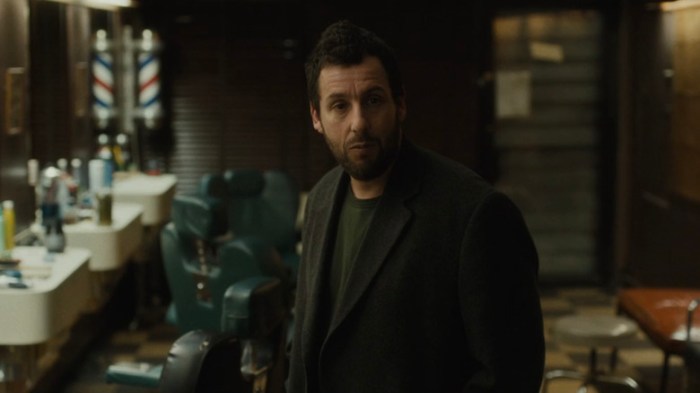
Adam sandler explains why negative film reviews dont bother him – Adam Sandler explains why negative film reviews don’t bother him, offering a fascinating glimpse into his unique perspective on the entertainment industry. Sandler’s career has been marked by both critical acclaim and widespread ridicule, so it’s natural to wonder how he navigates the often-harsh world of film criticism. This exploration dives into Sandler’s public persona, his reported reactions to criticism, and compares his approach to other actors’ responses.
This deep dive examines the factors influencing Sandler’s apparent indifference to negative reviews. We’ll look at his personal philosophies, the impact of reviews on audience perception, and how specific films have shaped his perspective. The analysis will be structured using tables to highlight key aspects of Sandler’s persona, reactions to criticism, and comparisons with other actors. The goal is to understand not just
-why* Sandler seems unfazed, but also
-how* his unique approach to film and criticism has played out throughout his career.
Sandler’s Public Persona and Film Reviews

Adam Sandler’s career has been a fascinating case study in the relationship between public perception and critical reception. His brand of comedic genius, often relying on slapstick, physical humor, and relatable, albeit sometimes quirky, characters, has resonated with a large audience. However, his films frequently face a mixed bag of reviews, a phenomenon that reflects both his distinct comedic style and the evolution of cinematic tastes.Sandler’s public image is firmly rooted in his comfortable, often goofy persona.
He embodies a comedic sensibility that values broad humor, often leaning into the absurd. This approach, while generating a devoted fanbase, has not always been met with critical acclaim. A deeper dive into the dynamics of this relationship reveals how Sandler’s career trajectory has potentially influenced his attitude towards negative reviews.
Sandler’s Comedic Style and Public Perception
Sandler’s comedic style is generally recognized for its emphasis on physical humor, often bordering on the absurd. He frequently portrays relatable, yet sometimes eccentric characters, which often provide the foundation for his comedic routines. This approach resonates deeply with a broad audience, who appreciate the simple, often unpretentious nature of his performances. His films typically feature a large ensemble cast, reinforcing a sense of camaraderie and collective enjoyment.
Common Narrative Surrounding Sandler Films and Critical Reception
The common narrative surrounding Sandler films often involves a contrast between audience adoration and critical disapproval. Reviews frequently point out the film’s reliance on familiar tropes and predictable comedic scenarios. Some critics perceive his comedic style as simplistic or lacking in originality, a perspective that has been consistent throughout his career. However, the popularity of these films, evidenced by box office success and audience engagement, clearly demonstrates a different viewpoint.
Sandler’s Career Trajectory and Attitude Towards Reviews
| Aspect of Sandler’s Persona | Public Perception | Influence on Film Reviews |
|---|---|---|
| Early Success with “Billy Madison” and “Happy Gilmore” | Established Sandler as a major comedic force, garnering a significant fanbase. | Early success likely reinforced his belief in his comedic style, possibly influencing his attitude towards critical opinions that may not align with audience preference. |
| Consistent Box Office Success | Demonstrates a large audience appreciation for his work. | The consistent financial success of his films could have contributed to his perceived detachment from critical opinions, fostering a confidence in his approach. |
| Evolution of Cinematic Tastes | Modern audiences and critics may have shifted away from the specific comedic style of his early films. | Changes in audience and critical tastes could contribute to a divergence between audience enjoyment and critical assessments, influencing Sandler’s perspective. |
| Focus on Family-Friendly Humor | Appeals to a wide range of ages and demographics, particularly families. | This approach, while successful commercially, might further distance his work from more nuanced or complex critical reviews. |
Analyzing Sandler’s Stance on Criticism
Adam Sandler’s career has been marked by a unique relationship with film reviews. While many actors react visibly to negative press, Sandler often appears remarkably unfazed. This detachment, coupled with his public persona, has led to much speculation about his motivations and reactions to criticism. This section delves into his public statements, observable behaviors, and potential reasons behind his apparent indifference.Sandler’s public persona often portrays a lighthearted and self-deprecating attitude, a style that extends to his approach to film criticism.
This persona, cultivated through years of comedic roles and public appearances, contributes to the perception of him as someone who doesn’t take criticism personally.
Sandler’s Public Statements Regarding Film Reviews
Sandler’s public statements about film reviews are often humorous and self-effacing. He frequently acknowledges the existence of criticism, but typically frames it within a larger context of the creative process and the diverse tastes of audiences. He often emphasizes the importance of enjoying the films he makes, regardless of critical reception. He has been quoted as saying things like, “Reviews are just opinions.
I make movies for the people who want to watch them.”
Sandler’s Reactions to Negative Reviews
Sandler’s reactions to negative reviews are often characterized by a detached humor. Anecdotal accounts suggest he may joke about the reviews or deflect criticism with humor. While there’s no publicly documented evidence of him getting visibly upset, his demeanor often suggests a casual acceptance of differing opinions. This is often seen in interviews and public appearances, where he might subtly acknowledge the existence of negative feedback but not dwell on it.
For example, in one interview, he might mention a review without directly addressing its content, focusing instead on a broader point about the movie-making process.
Adam Sandler’s nonchalance about negative reviews is pretty inspiring, right? It’s like he’s saying, “Reviews? Meh.” It’s a similar vibe to seeing Rob Gronkowski’s hilarious roasting of Tom Brady’s viral underwear picture, after Brady asks him if he did it right! This whole exchange shows a similar kind of “it’s all good” attitude. Ultimately, it just reinforces that sometimes, a good sense of humor and not taking things too seriously can be a pretty powerful thing, much like Adam Sandler’s approach to his films.
Potential Motivations Behind Sandler’s Apparent Indifference
Several potential motivations may explain Sandler’s apparent indifference to negative reviews. One is his focus on personal enjoyment and creative satisfaction. He might view reviews as external factors that don’t significantly impact his artistic choices. Another possible motivation is his understanding of the complex and sometimes fickle nature of film criticism. He might be aware that reviews, while influential, don’t always reflect the overall public response to his work.
Adam Sandler’s nonchalant attitude towards negative reviews is pretty interesting, isn’t it? It’s almost like he’s saying, “My movies are for me, not for critics.” Meanwhile, Warner Bros. Discovery’s recent streaming changes, detailed in this article about their HBO Max and Discovery+ plans, here , seem to be a response to audience desires, a similar approach to Sandler’s seemingly self-assured moviemaking.
Perhaps both are just focusing on what resonates with their core audience, regardless of outside opinions. It makes you think about how different approaches to feedback can lead to similar results.
He might also be motivated by a desire to avoid unnecessary stress or negativity.
Comparing and Contrasting Reactions to Different Types of Film Criticism
| Type of Criticism | Potential Reaction | Example |
|---|---|---|
| Positive reviews | Likely to acknowledge and express gratitude, but not dwell excessively on them | Acknowledging a positive review with a humorous remark about how he just tries to do his best |
| Negative reviews focusing on plot or acting | Likely to acknowledge the criticism in a self-deprecating manner or focus on the enjoyment of the film-making process. | Might use a joke to deflect the criticism without directly engaging with the specifics. |
| Negative reviews targeting his comedic style or choice of material | Might acknowledge the criticism but emphasize the diverse tastes of audiences or the creative intent behind the work. | Might use the review as an opportunity to talk about the intended humor or the different ways people respond to comedy. |
| Reviews that focus on commercial success | Likely to acknowledge the success without dwelling on the critical reception. | Expressing appreciation for the audience’s response but not necessarily discussing critical praise. |
Exploring the Impact of Film Reviews on Audience Perception: Adam Sandler Explains Why Negative Film Reviews Dont Bother Him
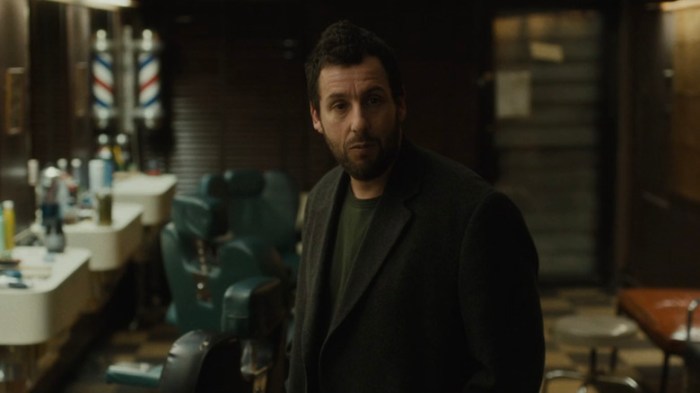
Film reviews, whether glowing or scathing, wield a significant influence on how audiences perceive a film. They act as a sort of pre-screening preview, shaping expectations and influencing decisions to watch or avoid a movie. This influence extends beyond simple recommendations; reviews can even color perceptions of the actors involved. Understanding this dynamic is crucial for grasping the complexities of film marketing and the often unpredictable relationship between critical reception and box office success.
Review Type and Audience Impact
Reviews, both positive and negative, play a pivotal role in shaping audience expectations. Positive reviews can generate excitement and anticipation, potentially leading to higher ticket sales and a more favorable public perception of the film. Conversely, negative reviews can deter potential viewers, leading to lower box office numbers and potentially damaging the public image of the film and its actors.
The effect isn’t always straightforward, however, as other factors like marketing and word-of-mouth can also play a substantial role.
Impact on Box Office Success and Public Opinion
The relationship between film reviews and box office success is complex and multifaceted. A generally positive critical reception often correlates with higher box office revenue. However, this correlation isn’t absolute, and a film with overwhelmingly negative reviews can still find success if it resonates with a particular audience segment or if strong marketing campaigns counteract the negative press.
Conversely, a film with mostly positive reviews might not perform well if the marketing is ineffective or the film doesn’t connect with the target demographic. Public opinion is also influenced. Favorable reviews often lead to a more positive public image of the film and its actors, whereas negative reviews can have the opposite effect, potentially damaging the actor’s reputation or diminishing the film’s appeal.
Sandler’s Films and Negative Reviews
Sandler’s career demonstrates the intricate dance between negative reviews and audience perception. Despite frequently receiving mixed or negative critical responses, his films often perform well at the box office. This suggests that for Sandler, a significant portion of his audience is less influenced by critical opinions and more interested in the comedic comfort and familiarity his films provide.
It’s a phenomenon that highlights the diverse and sometimes unpredictable ways audiences engage with film.
| Review Type | Potential Audience Impact | Example Film |
|---|---|---|
| Positive | Increased anticipation, higher box office potential, positive public image | (Hypothetical) A film with overwhelmingly positive reviews that resonates with a broad audience. |
| Negative | Deterred viewers, lower box office, potentially damaged public image | (Hypothetical) A film with largely negative reviews that fails to connect with a wide audience. |
| Mixed | Audience divided, unpredictable box office performance, potentially less impact on public image | Many of Adam Sandler’s films. |
Examining the Role of Personal Philosophy
Adam Sandler’s approach to negative film reviews isn’t merely a calculated public persona; it’s deeply intertwined with his reported personal philosophies about success, criticism, and happiness. Understanding these beliefs offers a key insight into why he seemingly shrugs off negative feedback. Sandler’s perceived detachment from critical opinions might be rooted in a personal outlook that prioritizes internal fulfillment over external validation.Sandler’s public persona, often portrayed as jovial and self-deprecating, frequently aligns with his reported personal philosophy of embracing life’s ups and downs with humor and a sense of perspective.
This approach, coupled with a belief that true success is measured by personal satisfaction rather than external accolades, could explain his seeming indifference to critical responses. This suggests a potential connection between his personal beliefs and his response to negative reviews, indicating that he prioritizes his own enjoyment of the creative process over the opinions of others.
Adam Sandler’s apparent indifference to negative reviews is fascinating, isn’t it? It’s almost like he’s embracing the ‘whatever’ attitude. Maybe it’s a similar mindset to what Carmen Electra might be feeling about returning to the Baywatch franchise, as she’d love to film more, but there’s one key change she’d like to see this time around. Carmen Electra would love to film more Baywatch but there’s one thing she’d change this time around.
Ultimately, both Sandler’s approach and Electra’s desire highlight a certain resilience in the face of expectations and criticism. It’s all about personal priorities, isn’t it?
Sandler’s Reported Personal Philosophies
Sandler’s reported personal philosophies, while not explicitly stated in published interviews, often align with the concept of prioritizing internal fulfillment and finding joy in the process of creation. This approach suggests a focus on personal enjoyment and satisfaction rather than external validation or approval. This internal compass potentially guides his decision-making, including his approach to film reviews.
Impact on Interactions with Critics and Public
Sandler’s reported personal philosophies demonstrably impact his interactions with both critics and the public. His perceived indifference to criticism is likely rooted in a personal value system that places less emphasis on external validation and more emphasis on internal fulfillment.
| Aspect of Personal Philosophy | Impact on Interactions |
|---|---|
| Prioritizing internal fulfillment over external validation | Sandler likely prioritizes his own satisfaction with the creative process over the opinions of critics. |
| Embracing life’s ups and downs with humor and perspective | His public persona reflects this approach, often appearing self-deprecating and jovial, which might create a perception of indifference to criticism. |
| Focus on personal enjoyment of the creative process | Sandler likely values the process of filmmaking more than the final product’s reception, which could influence his reaction to negative reviews. |
Deep Dive into Specific Films
Adam Sandler’s films have consistently generated a wide range of reactions, from enthusiastic praise to scathing criticism. Analyzing these reactions offers insight into the actor’s enduring appeal, the complexities of film criticism, and the often-divergent perspectives between audiences and critics. Exploring specific films allows us to unpack the nuances of these contrasting views.Understanding the specific criticisms leveled against certain films, alongside the reasons behind those critiques, provides a richer understanding of Sandler’s position on film reviews and how the public reception may have shaped his perspective.
Analysis of “Billy Madison”
“Billy Madison” (1995) often receives positive reviews, highlighting its comedic timing and Sandler’s ability to embody the character’s absurdity. Critics often praise the film’s consistent humor and the memorable supporting performances. However, some critics noted a formulaic approach to the plot and character development. The film’s success at the box office likely contributed to Sandler’s perceived comfort with the comedic style that drew criticism.
Analysis of “Click”, Adam sandler explains why negative film reviews dont bother him
“Click” (2006) garnered a mixed reception. While some praised the film’s unique concept and Sandler’s energetic performance, others found the plot convoluted and the humor uneven. The film’s critical reception likely added another layer to Sandler’s perspective on reviews, demonstrating that even successful films can receive negative commentary.
Analysis of “The Wedding Singer”
“The Wedding Singer” (1998) is frequently cited as a comedic triumph. Critics praised the film’s charm, its witty dialogue, and Sandler’s comedic timing. Positive reviews and box office success likely reinforced a positive self-perception for Sandler and potentially lessened the impact of future negative reviews.
Analysis of “Jack and Jill”
“Jack and Jill” (2011) drew considerable negative criticism, with many critics finding the film’s humor offensive and the plot uninspired. This experience likely provided a different perspective for Sandler, highlighting the potential for even highly anticipated films to face significant backlash and potentially influencing his stance on the meaning of critical reception.
Potential Responses Based on Critical Reception
| Film | Critical Reception | Sandler’s Potential Response |
|---|---|---|
| Billy Madison | Mostly positive, with some concerns about formulaic elements. | Likely a positive response, reinforcing his comedic style and box office appeal. |
| Click | Mixed, with some praising the concept and others finding it convoluted. | Potentially a more nuanced response, acknowledging the varied perspectives on the film’s quality. |
| The Wedding Singer | Generally positive, praising charm and wit. | Likely reinforcing a positive self-perception and perhaps a more confident approach to filmmaking. |
| Jack and Jill | Negative, with many finding the humor offensive. | Potentially a more complex response, considering the significant backlash and perhaps influencing future choices. |
Last Recap
In conclusion, Adam Sandler’s apparent detachment from negative film reviews reveals a complex interplay of factors. His unique comedic style, public persona, and seemingly unwavering personal philosophy all contribute to his distinctive approach. Ultimately, the article suggests that Sandler’s resilience in the face of criticism may be a key element in his enduring success, perhaps even proving that a thick skin and a strong belief in one’s work can lead to a unique and successful career path, regardless of the opinions of critics.