Illuminating the Meiji Era: How Kyoto Animation Reimagined Hiro Yuki’s Light Novel in Sparks of Tomorrow

While manga typically dominates the landscape of contemporary anime source material, light novels continue to serve as a fertile testing ground for ambitious narrative and visual adaptations. A prominent addition to this lineage is Netflix’s Sparks of Tomorrow, an intricate adaptation of Hiro Yuki’s acclaimed light novel series 20 Seiki Denki Mokuroku, translated as 20th Century Electricity Catalog. Produced by the renowned studio Kyoto Animation and directed by Minoru Ota, the series transports audiences to early 20th-century Kyoto during the Meiji era—a pivotal inflection point in Japanese history characterized by rapid modernization, the tension between traditional craftsmanship and industrialization, and a society standing on the precipice of an electrical revolution.
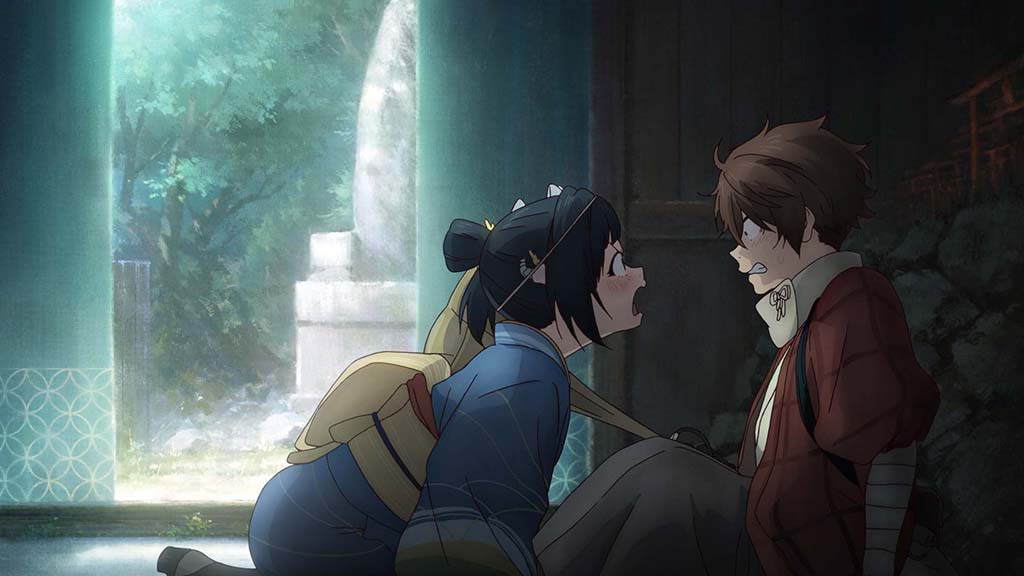
The narrative centers on Kihachi Sakamoto and his older brother, Seiroku, whose youthful aspirations involve replacing outdated steam technology with the clean, boundless potential of electricity. Their ambitions suffer a devastating blow when Seiroku is conscripted into military service and subsequently dies on the battlefield. Left grief-stricken and isolated, Kihachi’s worldview is upended during a chance encounter at a local shrine where he meets a young girl possessing an unexpected and profound connection to his late sibling. This encounter acts as a catalyst, reigniting Kihachi’s determination to fulfill their shared vision and radically alter the trajectory of human progress.
A Bold Visual Philosophy: Merging Painterly Aesthetics with Technological Motifs
Under the direction of Minoru Ota, Sparks of Tomorrow distinguishes itself through a radical departure from conventional anime aesthetics. Rather than relying on uniform digital cleanliness, the production team opted for a hybrid approach that seamlessly intercuts naturalistic, chibi, and surreal artistic styles. This stylistic fluidity allows the series to pivot effortlessly between heavy, dramatic tension and lighthearted comedic relief, establishing a distinct visual identity that mirrors the psychological states of its protagonists.
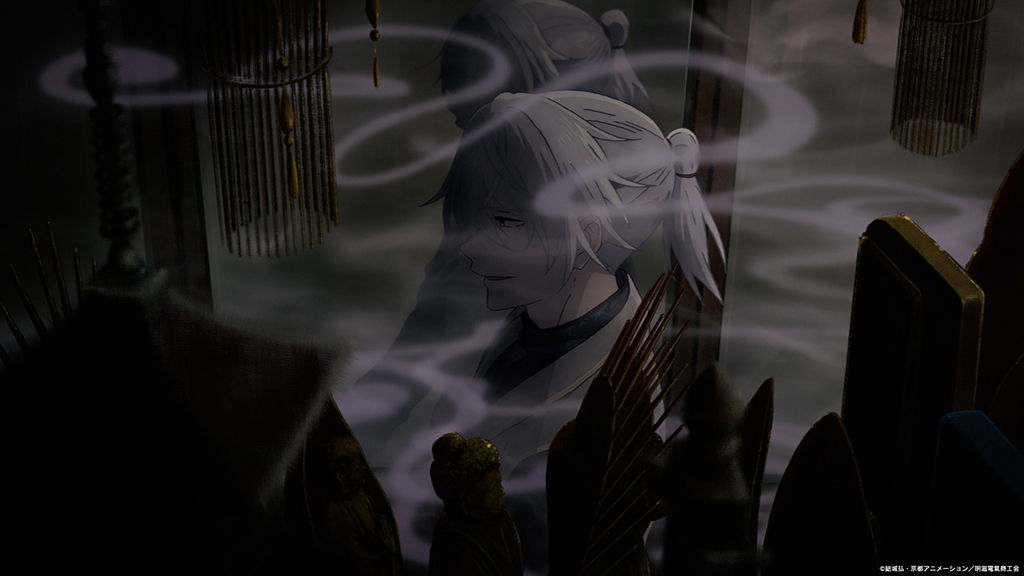
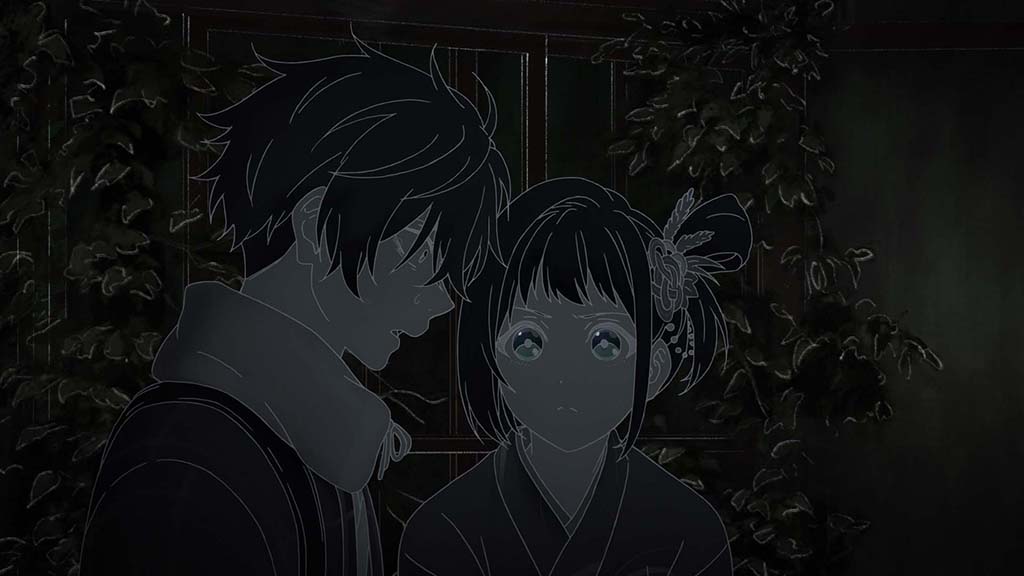
At the core of Ota’s directorial vision was the deliberate manipulation of atmosphere to underscore the narrative’s thematic dichotomy between stagnation and progress. Everyday scenes in early Meiji-era Kyoto were intentionally crafted to feel oppressive and dark, communicating a societal inertia trapped by an overreliance on steam engines. By plunging the characters into a grim, visually heavy environment, Ota sought to provide greater emotional weight and catharsis for their moments of triumph.

To achieve a true sense of dread in darker sequences—which are traditionally brightened in mainstream animation to maintain visibility—Ota implemented an innovative technique. By stripping away the intrinsic color of characters and backgrounds and rendering the primary animation cel lines in pure white, the production team effectively denied viewers the visual security normally afforded by ambient light, plunging the cast into authentic darkness.

Historical Influences and the Mechanics of Genius
To visually express Kihachi’s genius intellect and frantic imagination, the production team drew heavily from traditional Japanese cultural touchstones. Specifically, the visual motifs of fantasy cutouts and intricate collages were inspired by the customs of Obon, the traditional Japanese holiday dedicated to honoring ancestral spirits.
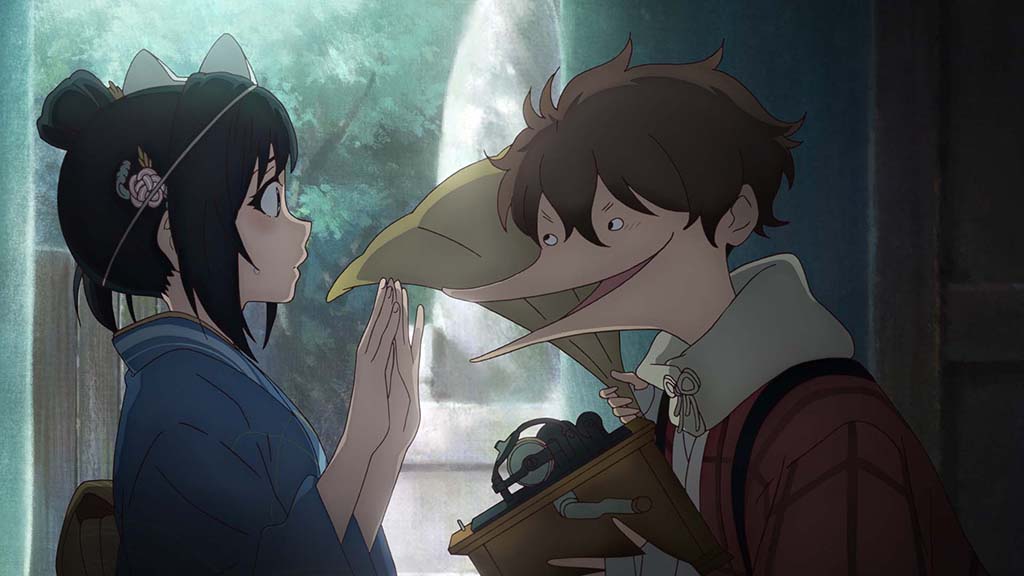
According to Ota, the imagery within Kihachi’s mind needed to feel unpredictable, overwhelming, and rooted in the visual vocabulary of the era. Consequently, the aesthetic was modeled after the works of Japanese oil painters active during the early 20th century. In the premiere episode, a complex mental collage incorporates scenes of men and women dancing at an Obon festival—depicted not as a contemporary community-wide event, but as a fashionable gathering for the youth of the period—which seamlessly transitions into children rotating prayer beads at a Jizo festival. This psychological stream-of-consciousness reflects Kihachi’s age and intellectual preoccupations, capturing how disparate cultural events occurring at the same time of year merge within his inventive mind.
Architectural Authenticity and the Steampunk Transformation of Kyoto
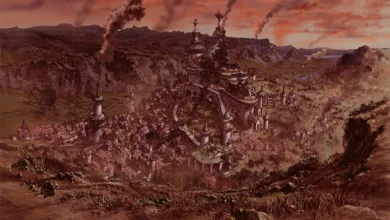
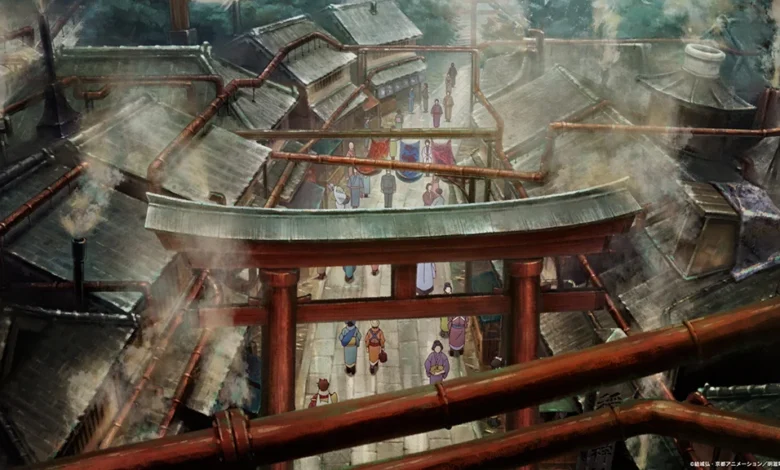
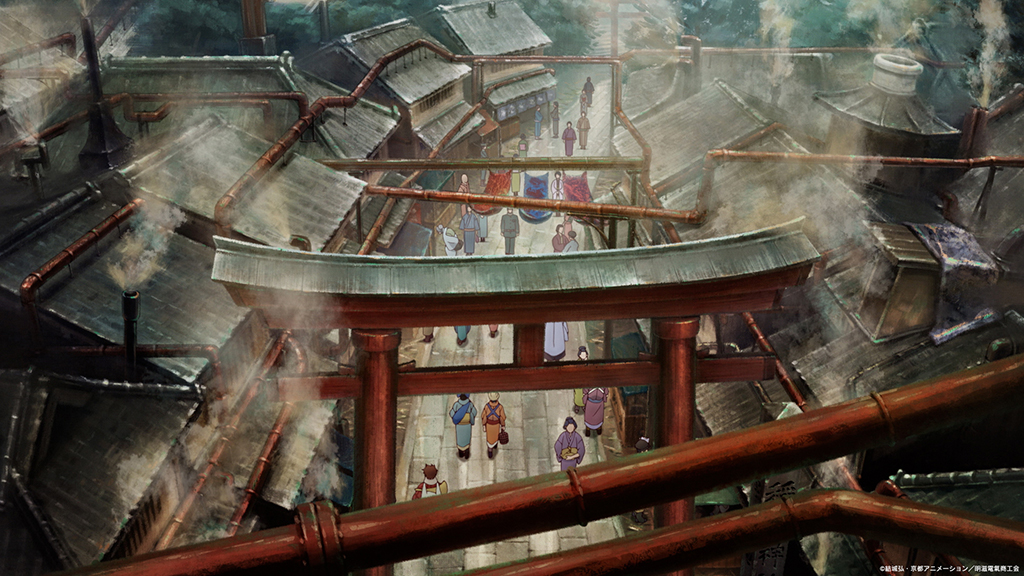
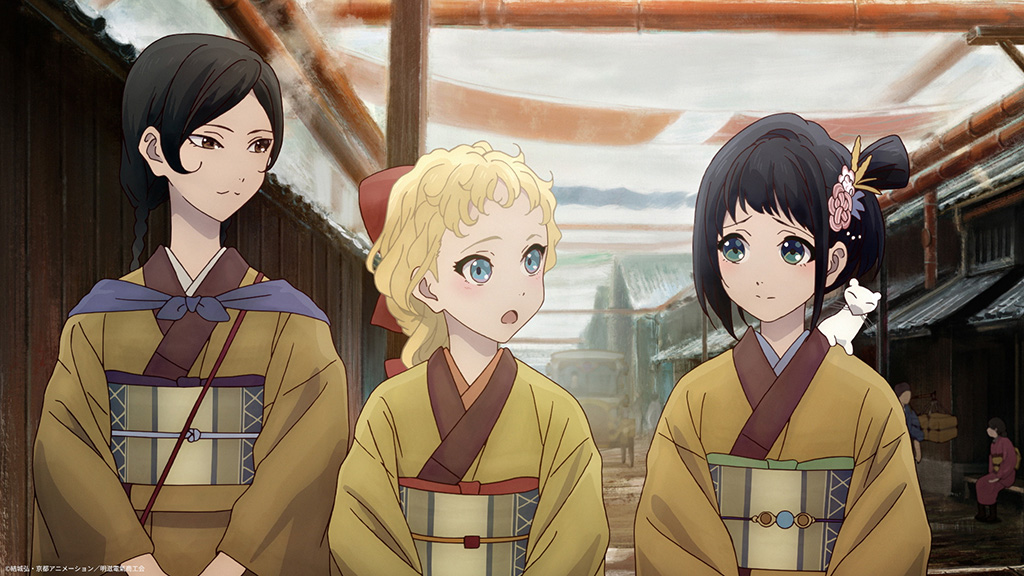
Recreating historical Kyoto required extensive on-site research and meticulous design coordination between Ota and Art Director Takayama. The real-world city, famous for its pale wood architecture and gray roof tiles, underwent a fictional steampunk transformation. An intricate, sprawling network of steam pipes was woven through the traditional streets to symbolize the heavy industrial burden weighing down the society.
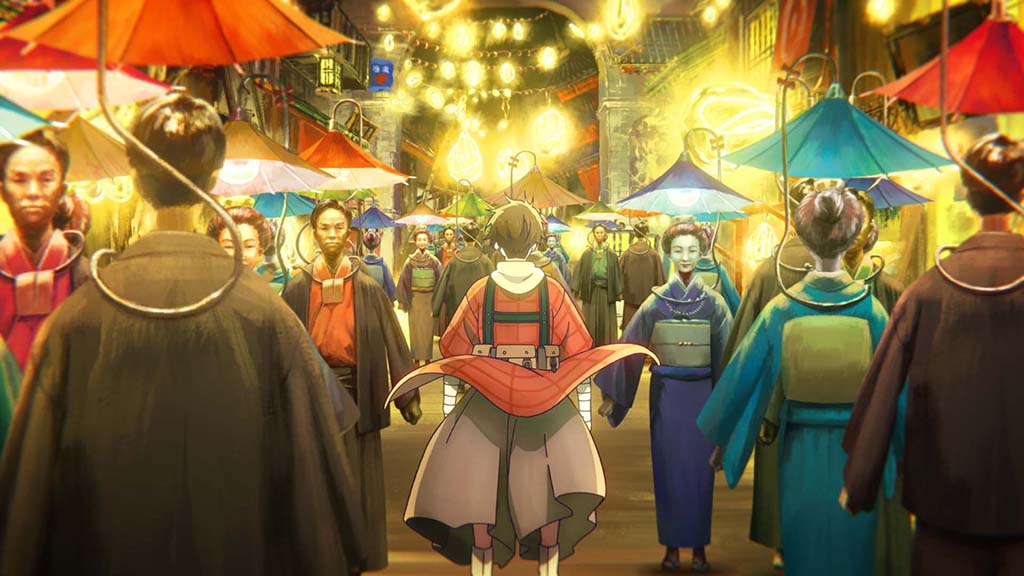
Initially, concept artists relied heavily on brown tones to convey the historical setting. Finding this palette lacking in intrinsic beauty, the team pivoted to blue as the base color for the main cityscape. Pairing this cool-toned sky with traditional Japanese architectural materials successfully established the desired atmosphere of historical gloom while preserving an artistic elegance.
Real-world locations were meticulously studied and integrated into the background art to enhance authenticity. The Horai Buddhist Altar Shop, which serves as Kihachi’s workshop, was modeled after actual liturgical shops observed by the production team. By utilizing a location that naturally houses wood, metal, small chemical compounds, and scientific tools, the artists provided a plausible environment for Kihachi’s early inventions. Similarly, the Momokawa family home and brewery were designed by merging observations from a declining, long-established sake brewery with a historic Kyoto estate, ensuring the depiction of traditional wealth remained opulent without sliding into tackiness.
Symbolism of Elements: Steam Versus Electricity
Sparks of Tomorrow utilizes elemental motifs to externalize character psychology and societal shifts. Steam and smoke represent stagnation, psychological confinement, and oppressive tradition. The background and compositing teams collaborated closely to inlay diverse patterns of smoke and steam, subtly altering their coloration to harmonize with the surrounding environments. Furthermore, steam-filled locations visually reflect the internal state of characters like Yosuke Mizoe, whose reliance on past achievements stunts his personal growth—a universal commentary on arrested development that resonates with modern audiences.
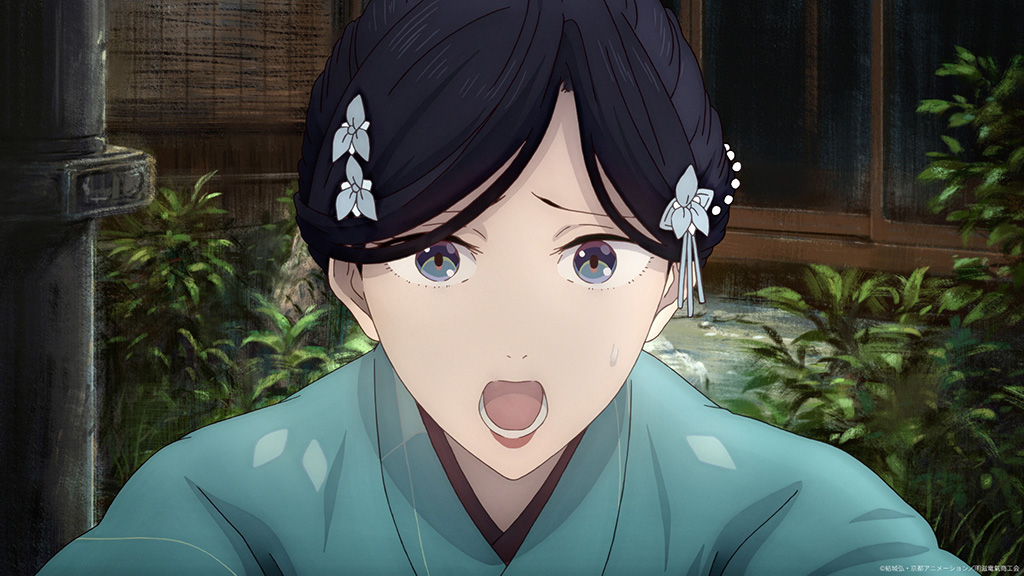
In direct opposition to steam, electricity is framed as an active force of hope and transformation. While Kihachi’s early inventions operate within known scientific boundaries, their activation projects a vibrant yellow light onto characters and buildings, radiating optimism across the screen. Whether conveyed through lighting, musical cues, or mechanical components in later episodes, the presence of electricity consistently signals a dawn of human potential.
Production Challenges and the Pursuit of Innovation
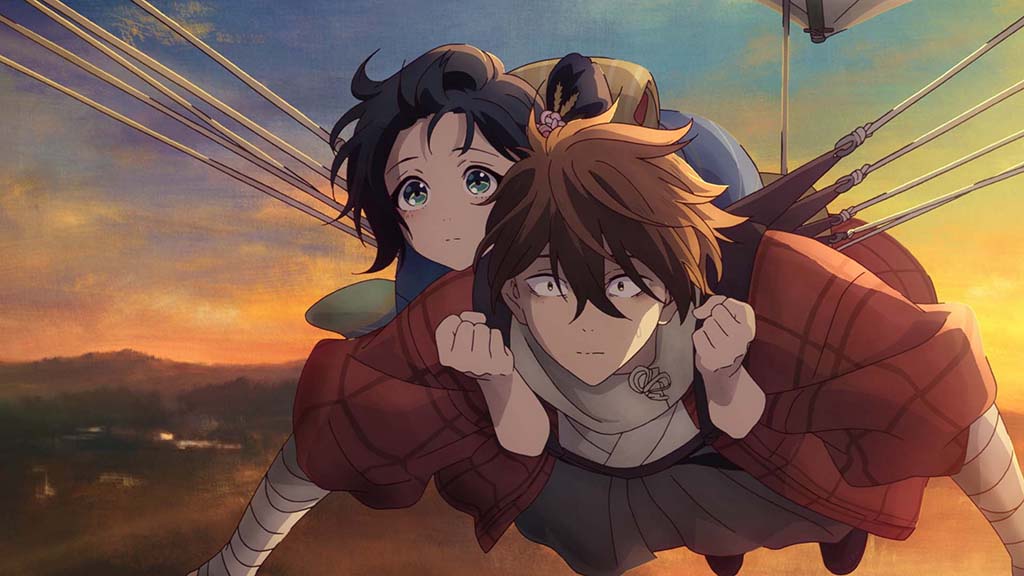
The realization of Sparks of Tomorrow was fraught with technical hurdles, particularly due to the heavy reliance on 2D animation techniques. Integrating painterly, expressive background art—complete with visible brushstrokes—with digital animation proved exceptionally difficult. Because angular 3D assets consistently clashed with the fluid hand-drawn aesthetic, the production team minimized digital tools, relying on a select group of specialists to manage perspective and spatial calculations, such as the breathtaking overhead tracking shots during Kihachi and Inako’s rooftop kite escape.

Sequences depicting Kihachi’s internal thought processes demanded complex harmony cels, requiring the art department to take over coloring duties typically managed by the painting department. With certain cuts demanding over one hundred distinct assets, production schedules stretched to accommodate the painstaking analog execution, including drawing individual frames with the flat sides of pencils to maximize visual density.
Narrative Intersections and Broader Implications
As Sparks of Tomorrow moves toward its conclusion, the series offers a nuanced reflection on innovation, grief, and human connection. By grounding a fantastical and inventive narrative in the historical realities of Meiji-era Japan, Kyoto Animation and Minoru Ota have crafted a visually daring work that challenges conventional anime production standards. The intersection of Kihachi’s relentless engineering, Inako’s unyielding optimism, and the sweeping societal changes of an emerging technological age highlights the studio’s ongoing commitment to pushing artistic boundaries. As the final episodes air, the series stands as a testament to the enduring power of light novel adaptations when executed with rigorous historical research, uncompromising artistic vision, and thematic depth.