Five Best Trackers for Jungle, IDM, and Breakcore Production: A Comprehensive Guide to Modern Vertical Sequencing

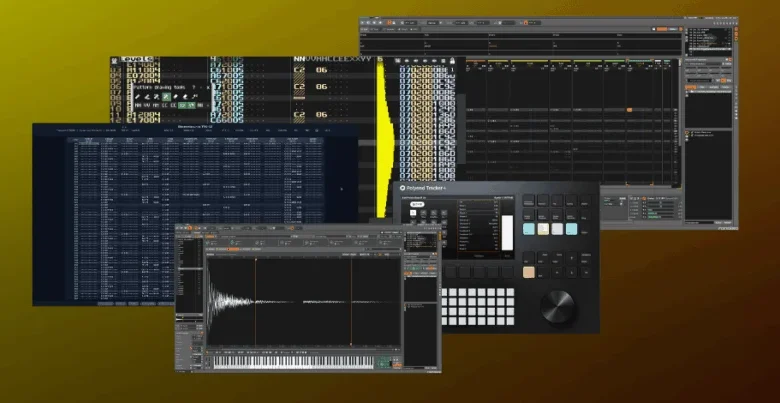
The landscape of digital music production has long been dominated by the horizontal timeline, a visual metaphor inherited from the tape machines of the 20th century. However, for a dedicated subset of electronic music producers—particularly those operating within the intricate realms of jungle, Intelligent Dance Music (IDM), and breakcore—an alternative paradigm exists. Music trackers, characterized by their vertical orientation and alphanumeric data entry, offer a precision-oriented workflow that traditional Digital Audio Workstations (DAWs) often struggle to replicate. While the horizontal piano roll of software like Ableton Live or Logic Pro emphasizes fluid arrangement, the tracker focuses on the granular control of individual steps, making it an indispensable tool for the complex rhythmic programming required in modern electronic subgenres.

The Historical Evolution of the Music Tracker
To understand the modern resurgence of trackers, one must look back to the late 1980s. The tracker format originated in 1987 with the release of Karsten Obarski’s Ultimate Soundtracker for the Commodore Amiga. This software was revolutionary, allowing for four channels of 8-bit digitized samples to be played back simultaneously. It quickly became the foundation of the "demoscene," a global subculture of programmers and artists who pushed computer hardware to its limits to create audiovisual presentations.

Throughout the 1990s, the tracker evolved through various iterations such as ProTracker, NoiseTracker, and the seminal OctaMED. The latter became the primary weapon for the UK’s emerging jungle and drum and bass scenes. Producers like DJ Aphrodite, Bizzy B, and DJ Zinc utilized the tracker’s unique ability to "slice" breaks and manipulate sample offset commands with surgical precision. This era established the tracker as more than just a tool for hobbyists; it was a professional-grade sequencer capable of defining the sound of an entire decade of club music. Even as the industry shifted toward VST-capable DAWs in the early 2000s, the tracker remained a cult favorite, utilized by experimental pioneers such as Aphex Twin (notably using PlayerPro for his Drukqs album) and Venetian Snares.

The Mechanics of Vertical Sequencing
The fundamental difference between a tracker and a traditional DAW lies in its interface. In a tracker, time moves from the top of the screen to the bottom. The screen is divided into columns representing different tracks or "channels," and rows representing divisions of a musical bar. Instead of visual blocks or MIDI notes, the producer enters hexadecimal values—base-16 numbers—to represent note pitches, volume levels, and effect parameters.

This numerical approach facilitates "Step-FX," which are specialized commands applied to individual lines of the sequence. These allow for rapid-fire "ratcheting" (re-triggering a note multiple times in a single step), glides, randomization, and instantaneous pitch shifts. For a jungle producer, this means a breakbeat can be rearranged and processed note-by-note without ever leaving the sequencer view. The efficiency of this workflow, once mastered, allows for a level of micro-editing that remains the gold standard for high-speed, rhythmically dense music.

Top Software Trackers: Accessibility and Depth
For producers looking to enter the world of tracking without a significant financial investment, software remains the most logical starting point. The current market offers a range of options from modular environments to fully-featured DAWs.

1. Alexander Zolotov SunVox
SunVox represents the intersection of modular synthesis and traditional tracking. Developed by Alexander Zolotov and first released in 2008, it is a remarkably lightweight yet powerful tool. Available for free on desktop platforms and as a low-cost app for iOS and Android, SunVox is built on a modular engine where synthesizers, samplers, and effects are linked via a graphical "Module View." This modularity allows for complex signal routing that can then be sequenced via its internal tracker. Its ability to run on virtually any hardware—from modern PCs to legacy mobile devices—makes it a staple for the "lo-fi" and mobile production communities.

2. Electronisounds TRX-12
The TRX-12, developed by Dean Daughters of Electronisounds, is a testament to the grassroots nature of the tracker scene. Unlike more complex modular systems, TRX-12 is designed as a self-contained "Tracker DAW." It streamlines the process of modern production by including three polyphonic synth engines and dedicated slicer tracks specifically for breakbeat manipulation. Its primary appeal lies in its 35 Step-FX commands, which provide a bridge for traditional DAW users to experience the "happy accidents" and rhythmic glitches that trackers are famous for. Priced at approximately $30, it serves as an affordable entry point for Windows and Mac users.

3. Renoise: The Industry Standard
If there is a "flagship" for modern tracking, it is Renoise. Since its inception in 2002, Renoise has successfully modernized the tracker format by integrating contemporary features like VST/AU plugin support, multi-core processing, and advanced internal modulation. Version 3.5 represents the pinnacle of the software’s development, offering a world-class sampler and a suite of high-quality native effects. Renoise is often cited as the bridge between the old-school Amiga workflow and the modern studio environment. Its "Redux" plugin version even allows producers to use the Renoise tracking engine inside other DAWs like Ableton Live, providing the best of both worlds.

The Hardware Resurgence: Portability and Tactile Control
In recent years, the industry has witnessed a surprising trend: the return of the hardware tracker. These devices take the vertical sequencing logic and house it within dedicated, tactile instruments.

4. Dirtywave M8
The Dirtywave M8 is a handheld powerhouse inspired by the LSDJ (Little Sound Disk Jockey) software used on Nintendo Gameboys. Despite its small form factor, it features a sophisticated eight-track sequencer, an FM engine, a sampler, and a synthesis engine based on the open-source code of Mutable Instruments’ Braids. The M8 has gained a massive following due to its "tracker-in-your-pocket" appeal and its remarkably high audio quality. The recent Model:02 update, priced at $699, includes a larger screen and improved battery life, solidifying its position as a premier mobile production tool.

5. Polyend Tracker+
In 2020, Polyend released the first dedicated large-format hardware tracker, effectively moving the tracker out of the computer and onto the desk. The updated Tracker+ is a comprehensive workstation featuring a large screen, a mechanical jog wheel, and a grid of pads for note entry. It expands upon the original design with four internal synth engines, a drum machine, and the ability to record audio directly via a built-in FM radio or line inputs. At $999, it is the most expensive option on the market, but it offers a tactile, "no-computer-needed" experience that many modern producers find essential for creative focus.

Comparative Analysis: Why Choose a Tracker?
Supporting data suggests that the resurgence of trackers is tied to the "choice overload" often found in traditional DAWs. While a modern DAW provides infinite tracks and visual feedback, it can lead to "mouse fatigue" and a lack of rhythmic innovation. Trackers, by contrast, force the producer to think in terms of steps and values.

| Feature | Traditional DAW | Music Tracker |
|---|---|---|
| Visual Orientation | Horizontal (Timeline) | Vertical (Rows/Steps) |
| Data Entry | Graphical (Piano Roll) | Alphanumeric (Hexadecimal) |
| Rhythmic Precision | High (Grid-based) | Absolute (Per-step FX) |
| Learning Curve | Moderate | Steep (Initial) |
| Hardware Integration | Extensive | Growing (M8, Polyend) |
Industry analysis indicates that the tracker’s "step-based" logic is particularly effective for genres that rely on the "Amen Break" or other sampled drums. Because every line in a tracker corresponds to a specific moment in time, a producer can apply a different filter cutoff, pitch shift, or reverse command to every single snare hit with a few keystrokes.

Broader Impact and Future Implications
The impact of trackers extends beyond the niche genres of jungle and IDM. Modern pop and trap producers are increasingly adopting tracker-like workflows—seen in the "step sequencing" features of hardware like the Elektron Digitakt—to achieve the stuttering hi-hats and glitchy transitions that define contemporary radio hits.

Official responses from developers like Polyend and Renoise suggest a commitment to longevity. "The tracker is not just a retro curiosity; it is a logic system for composition," stated one developer in a recent community forum. This sentiment is echoed by the growing number of YouTube tutorials and Discord communities dedicated to "tracking."

As we move toward 2027, the line between software and hardware trackers continues to blur. With the integration of AI-assisted sample slicing and cloud-based collaboration within tracker environments, the format is poised to remain a vital part of the producer’s toolkit. Whether as a specialized tool for complex rhythmic programming or as a complete DAW replacement, the music tracker continues to prove that sometimes, looking at music from a different angle—specifically, from the top down—is exactly what is needed to break through creative plateaus. For those willing to scale the initial learning curve of hexadecimal values and vertical scrolling, the reward is a level of creative control that remains unmatched in the digital age.