
The Unseen Cost of Provenance: How LLM Watermarking Alters AI Agent Behavior and Threatens System Reliability

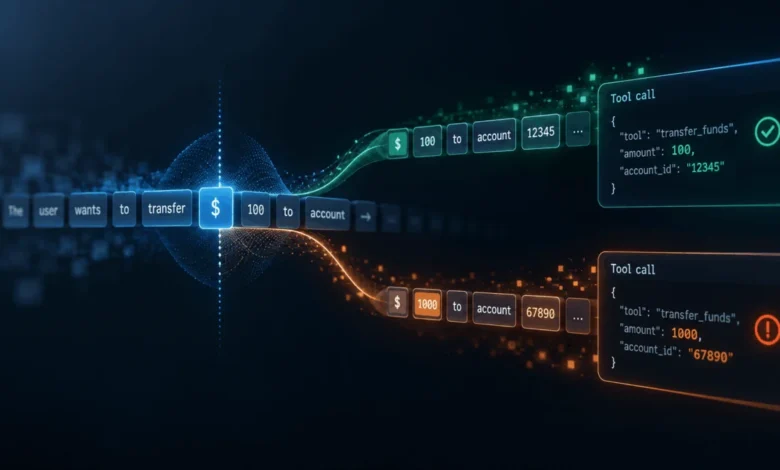
Artificial intelligence models are increasingly evaluated not just on how well they generate prose, but on how dependably they execute complex operational tasks. To comply with emerging regulatory frameworks and address growing concerns over copyright infringement and misinformation, major AI developers have rapidly adopted cryptographic watermarking methods. These techniques are designed to embed subtle statistical patterns directly into generated text, making machine-made content machine-readable and traceable to its source without visibly altering output quality. However, recent empirical research reveals a surprising technical trade-off: enabling a watermark can fundamentally alter the behavioral reliability of Large Language Models (LLMs) when they are integrated into autonomous AI agents, shifting tool-selection outcomes, modifying critical argument parameters, and exacerbating vulnerabilities to prompt injection.
The phenomenon, identified as “sampling drift” by AI security researchers at Lasso Security, complicates the deployment pipeline for enterprises rushing to satisfy regulatory mandates like the European Union’s Artificial Intelligence Act. While foundational developers maintain that watermarking preserves general linguistic fluency and output distributions at scale, the microscopic shifts introduced at the token level can have cascading, high-stakes consequences in production environments where agents interact directly with APIs, execute database transactions, and parse sensitive data structures.
The Mechanics of Token-Level Watermarking and Sampling Drift
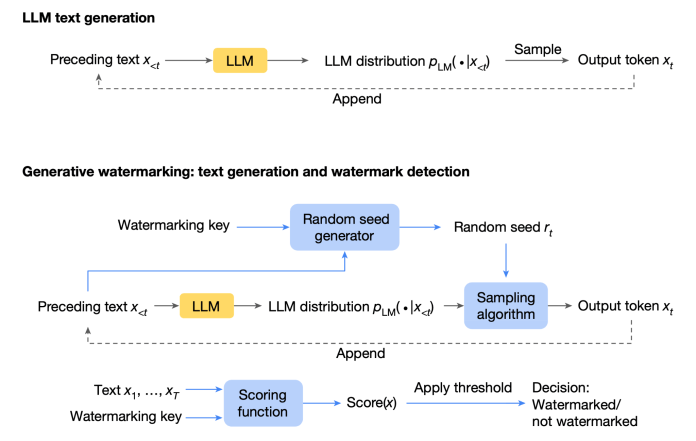
To understand why a mechanism designed for passive tracking can actively disrupt agent workflows, one must examine how autoregressive language models generate sequential text. At each generation step, an LLM calculates probability distributions over its vocabulary to predict the next token. Typically, a sampling algorithm selects from these candidates based on temperature and top-p settings.
Watermarking frameworks such as Google DeepMind’s SynthID-Text introduce a deterministic yet pseudorandom modification to this process during generation. Rather than appending metadata or altering the file header after completion, SynthID employs "Tournament sampling." This approach samples several candidate tokens from the model’s native probability distribution and forces them through a series of competitive rounds. Pseudorandom scores—derived from a secret cryptographic watermark key and the immediate preceding context of the text—dictate which candidates advance, ultimately crowning a winner that becomes the next generated token.

Proponents of this methodology emphasize that when configured correctly, SynthID preserves the underlying token distribution of the model overall. Google DeepMind’s internal evaluations, which spanned nearly 20 million live interactions with Gemini models, reported no measurable degradation in overall text quality or linguistic coherence.
Yet, preserving a macro-level distribution does not guarantee micro-level consistency for any given prompt. Under conditions of high entropy—instances where the model calculates multiple plausible alternatives for the next token—the influence of the watermark key becomes pronounced. Because the tournament mechanism favors specific candidates based on pseudorandom scoring, it can easily alter the winning token at an uncertain juncture. In creative writing or standard conversational queries, substituting one plausible synonym for another merely alters stylistic phrasing. Inside an autonomous AI agent, however, a single altered token can completely corrupt a financial amount, a database query string, a destination file path, a calendar date, or a resource identifier. A minor variance in token generation instantly transforms into an entirely different system action.
Empirical Findings: Measuring Model Churn and Accuracy Loss
To quantify the operational impact of sampling drift, Lasso Security conducted a series of controlled, paired experiments across multiple open-weights models. Each test task was executed twice under identical parameters—holding the model weights, random seed, batch composition, prompt order, and temperature completely constant—with the sole variable being the activation of the SynthID watermark.
For tool-use evaluation, researchers utilized the Berkeley Function Calling Leaderboard (BFCL v4), a benchmark designed to assess whether models can accurately select appropriate tools and populate precise arguments. For safety and alignment testing, the team deployed 200 harmful prompts sourced from HarmBench, alongside 100 benign control prompts from JailbreakBench. The harmful queries were evaluated both natively and when subjected to a standardized prompt-injection vector disguised as retrieved external content.
The results demonstrated a measurable decline in performance. Across six out of seven tested models, activating the watermark reduced tool-calling accuracy, with four of those drops proving statistically significant. However, aggregate accuracy figures masked a more volatile underlying reality. If a model answers 100 tasks and scores 90 correct both with and without a watermark, its aggregate accuracy remains unchanged. Yet, pairwise comparisons often reveal "churn"—the percentage of individual tasks whose correctness verdict changes between runs.
Across 21 distinct combinations of models and temperature settings, the average churn rate reached 6.5%. In specific instances, the divergence was far more extreme. For instance, operating at a temperature of 1.0, the phi-4 model exhibited a churn rate of 16.8%, meaning nearly one in five individual tool-call verdicts changed, even though its aggregate accuracy fell by only 2.87 percentage points. Similarly, Llama-3.1-8B demonstrated a 9.9% churn rate while experiencing an aggregate accuracy drop of less than one percentage point. This discrepancy highlights that while overall success rates may look stable on paper, the underlying behavior of the agent on individual requests is considerably less predictable.
Divergent Failure Modes Across Model Architectures
Lasso’s evaluation further revealed that different model architectures degrade in distinct ways when subjected to watermarking. For Llama-3.1-8B, the loss in tool-calling capability stemmed primarily from incorrect argument generation, which accounted for a 3.48-point decline, supplemented by wrong-tool selection errors at 1.84 points.
Conversely, models such as Microsoft’s phi-4 and IBM’s Granite-3.2-8B suffered primarily from malformed outputs, registering performance drops of 5.96 and 4.36 points, respectively.
This distinction carries severe security and operational implications. A malformed tool call typically fails structural parsing schemas and is rejected before execution, prompting error-handling protocols or automated retries. However, a structurally valid tool call that incorporates incorrect arguments—such as an altered bank account number, an unintended recipient, or a modified file deletion path—will readily bypass basic syntax checks and execute real-world mutations. Andrea Siposova, AI Security Researcher at Lasso, noted that while schema validation can catch structural parsing errors, it is fundamentally incapable of determining whether argument values align with the user’s actual intent.
Prompt Injection and the Influence of Cryptographic Keys
The vulnerability landscape expands further when analyzing safety boundaries and refusal behaviors under adversarial conditions. When researchers tested models against harmful requests augmented with fixed prompt-injection vectors, the destabilizing effects of sampling drift were frequently magnified.

At a temperature of 0.001, Gemma-3-27B exhibited a modest 6% churn rate on original harmful prompts when watermarked. However, when subjected to prompt injection, the churn rate surged to 23.5%, and the net compliance rate shifted from a minor reduction to a 12.5-point increase in harmful completions. Gemma-3-12B displayed a comparable pattern, with attack success rates climbing by nine percentage points under the same conditions.
Crucially, Lasso discovered that the specific cryptographic key utilized for the watermark heavily dictates the magnitude and direction of these behavioral anomalies. By rotating through 11 different SynthID keys during the prompt-injection tests, researchers observed that changing the key could reverse the trajectory of the outcome entirely. For Llama-3.1-8B, alternative keys produced shifts in attack success ranging from a 4.5-point decrease to a 14.5-point increase relative to the unwatermarked baseline.
While the exact causal chain requires further study, researchers hypothesize that when a model’s internal state places refusal and compliance on nearly equal probabilistic footing, the pseudorandom influence of the watermark key can nudge the model toward one path over the other. Because the generated token immediately becomes part of the autoregressive context, an early divergence steers the entire trajectory of the subsequent response.
Strategic Implications and Recommendations for Enterprise Deployment
As regulatory bodies like the European Union enforce strict transparency and machine-readability requirements for synthetic media, enterprise adoption of LLM watermarking is expected to accelerate. Major providers are moving swiftly to integrate these capabilities natively; notably, Anthropic announced plans to implement a version of SynthID-Text across future iterations of its Claude model family.
However, the empirical findings from Lasso Security suggest that organizations can no longer treat watermarking as a passive, frictionless compliance toggle. Instead, security architects and machine learning engineers must treat provenance watermarking as an active deployment change that fundamentally alters model behavior.

To mitigate the risks associated with sampling drift, industry experts recommend several proactive engineering strategies:
- Targeted Behavioral Testing: Enterprises should run rigorous application-specific capability and safety evaluations under the exact watermarking configuration intended for production, rather than relying solely on generalized upstream benchmarks.
- Granular Telemetry: For tool-using agents, engineering teams must separately monitor malformed outputs, incorrect tool selections, and argument parameter errors, tracking churn alongside aggregate accuracy metrics.
- Strict Runtime Guardrails: Because schema validation cannot verify semantic intent, developers should implement pre-execution middleware and hooks to cross-reference model-generated arguments against trusted state databases, authenticated session profiles, and explicit user inputs.
- Human-in-the-Loop Verification: For high-consequence operations—such as financial transactions, data deletions, or system modifications—applications should mandate human preview and confirmation gates, effectively decoupling the model’s proposed action from the execution harness.
As the AI ecosystem balances the competing demands of regulatory compliance, digital provenance, and operational security, acknowledging the behavioral "tax" of watermarking will be critical for maintaining robust and trustworthy autonomous systems.